Automated Ticket Assignment System for Enterprise: Building Scalable Service Operations
Enterprises across Southeast Asia are experiencing a rapid increase in customer service complexity. As businesses expand into countries such as Thailand, Malaysia, Indonesia, Vietnam, and the Philippines, customer inquiries arrive through more channels, in more languages, and across multiple time zones. Traditional manual ticket handling struggles to keep pace with this growth. Delayed responses, inconsistent routing decisions, and uneven agent workloads often lead to missed SLAs and declining customer satisfaction. Against this background, enterprises are increasingly turning to an automated ticket assignment system for enterprise operations. By embedding automation into ticket classification, routing, and prioritization, companies can maintain service quality while scaling efficiently across diverse Southeast Asian markets.
Turning Fragmented Requests into Structured Workflows
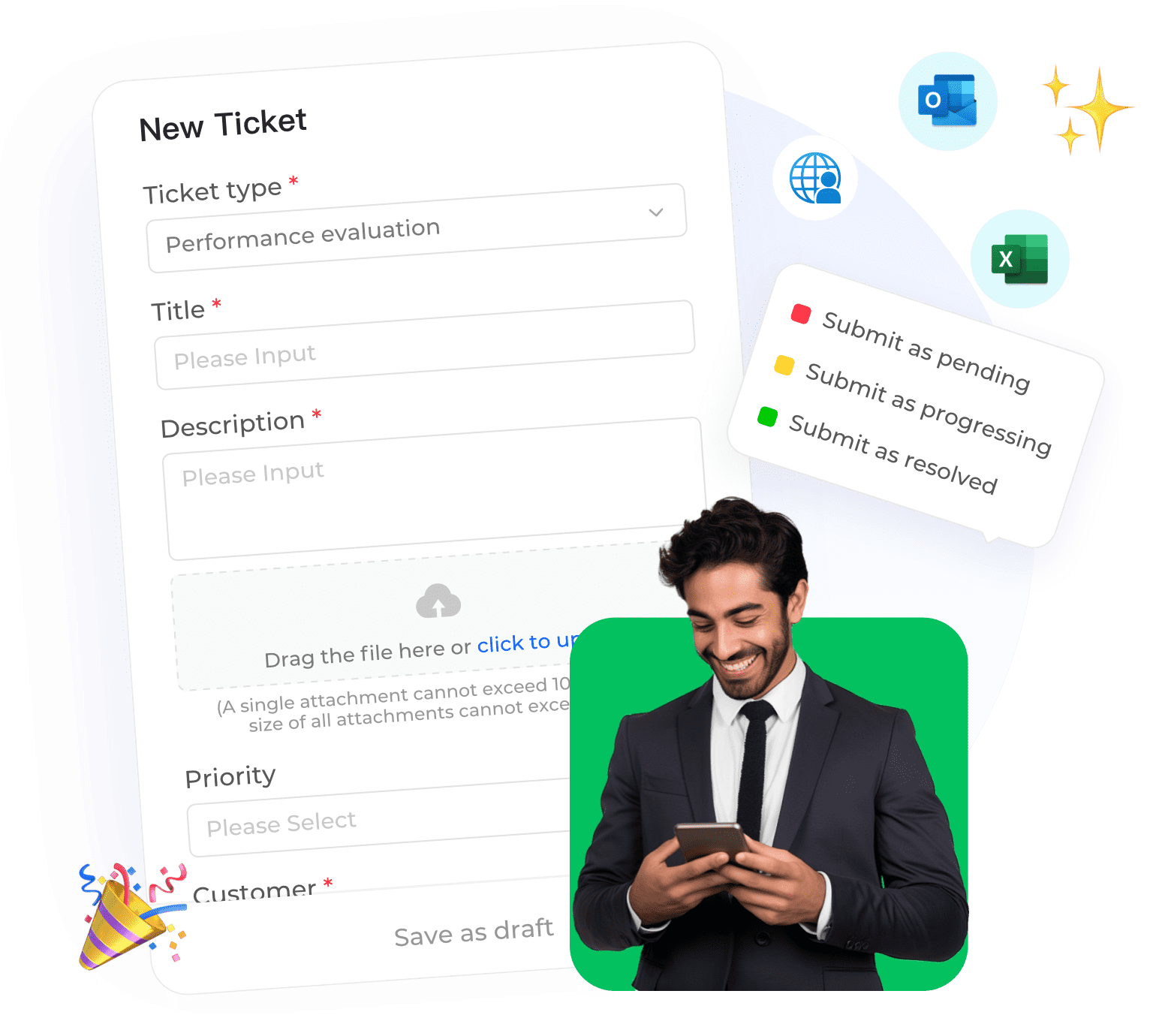
An automated ticket assignment system for enterprise use is not only about speed. It is about structure. Instadesk designs its ticket system to act as a central operational layer where inquiries from more than 20 service channels are unified into a single workspace. Emails, social media messages, in-app requests, phone calls, and web forms are transformed into structured tickets rather than isolated messages.
Within Instadesk, tickets are automatically categorized based on issue type, language, customer profile, and service priority. Intelligent routing rules then assign tickets to the most appropriate team or agent, taking into account skill tags, business responsibility, and time zone alignment. This automation reduces manual decision-making and ensures that tickets from Thailand, Malaysia, or Indonesia reach the right service team without delay. For enterprises operating across Southeast Asia, this structure is essential for maintaining consistency and transparency at scale.
Core Capabilities That Power Automated Assignment
Instadesk’s automated ticket assignment system for enterprise environments is built on several tightly integrated capabilities. First, AI-powered ticket classification automatically identifies the nature of each request, allowing the system to distinguish between billing inquiries, technical issues, service complaints, or follow-up requests. Second, multilingual processing enables tickets written in different languages to be handled within the same workflow, reducing reliance on large, language-specific teams.
Third, intelligent routing assigns tickets to teams with matching expertise or regional responsibility. Tickets can also be prioritized according to SLA requirements, ensuring urgent cases are handled first. Finally, the system provides full visibility through dashboards and exportable reports, allowing managers to track ticket status, response times, and SLA compliance. Together, these capabilities allow Instadesk to deliver a stable and scalable foundation for enterprise service operations across Southeast Asia.
IMOU and Global Consumer Hardware Support
IMOU, a global smart home brand with more than 45 million users across over 100 countries, faced significant service pressure as its overseas business expanded. Customer inquiries were scattered across more than 20 channels, and service coverage involved over 10 major languages. Before adopting Instadesk, manual ticket handling made it difficult to maintain response speed and service consistency across regions such as Southeast Asia.

By implementing Instadesk’s ticket system, IMOU unified all inbound inquiries into a single workspace. Automated ticket classification and routing assigned each case to the appropriate team based on language, issue type, and responsibility. Time zone–based routing ensured that tickets from markets like Thailand, Malaysia, and Indonesia were handled during local working hours. As a result, IMOU achieved a 99.2% SLA compliance rate while supporting real-time communication in 15 languages. The automated ticket assignment system played a central role in transforming fragmented service requests into a standardized global service workflow.
Thailand Metropolitan Waterworks Authority
The Metropolitan Waterworks Authority of Thailand operates the 1125 public service hotline, a critical channel for billing inquiries, outage reports, and service updates for Bangkok and surrounding regions. Call volumes fluctuate heavily during service incidents, placing immense pressure on human agents.
Instadesk was deployed as part of MWA’s service infrastructure to support automated service handling and structured case management. Incoming requests are converted into trackable cases through integrated workflows, with automated routing directing issues to either the AI voice service or human agents when escalation is required. Instadesk supports more than 40 concurrent inbound calls and maintains consistent service quality during peak demand. Ticket-related data, call records, and service outcomes are fully traceable and compliant with Thailand’s PDPA requirements. Through this automated approach, MWA established a resilient and scalable public service model while reducing operational strain on live agents.
Operational Impact Across Southeast Asian Markets
Across enterprise and public-sector use cases, the value of an automated ticket assignment system for enterprise operations becomes especially clear in Southeast Asia. Countries such as Thailand, Malaysia, Vietnam, Indonesia, and the Philippines share common challenges: multilingual customers, uneven call volumes, and rising expectations for fast responses. Instadesk addresses these challenges by embedding automation into everyday service workflows rather than treating it as an add-on.
Automated assignment reduces response delays, improves first-contact resolution, and helps enterprises meet SLA targets consistently. Managers gain clearer visibility into workloads and service performance, while customers experience faster and more reliable support regardless of location or language. These benefits make Instadesk particularly suitable for organizations managing cross-border operations within Southeast Asia.
A Practical Foundation for Enterprise Service Growth
An automated ticket assignment system for enterprise use is no longer optional for organizations expanding across Southeast Asia. It is a foundational capability for sustainable growth. Through intelligent classification, routing, and SLA-oriented workflows, Instadesk enables enterprises to convert complex, multi-channel demand into structured and manageable service operations.
The experiences of IMOU and Thailand’s Metropolitan Waterworks Authority demonstrate how automated ticket assignment can support both commercial and public service environments. By providing a unified, scalable, and data-driven ticket system, Instadesk helps enterprises deliver consistent service quality across Thailand, Malaysia, Indonesia, Vietnam, and beyond. As customer expectations continue to rise, automation-driven ticket management will remain a key pillar of enterprise service success in Southeast Asia.
Share This Article



Issac
Omnichannel Digital Operations: Driving Traffic Growth & Deepening User Value
You may also like

Ticket Association and Linked Issue Management: A Guide for Financial Credit Services
Credit services face complex, interrelated customer issues requiring unified support. Ticket association links related tickets, revealing full context and root causes. Instadesk’s VoiceBot automates linking, history access, and workflows, cutting handle times, boosting satisfaction, and resolving disputes faster.


E-Commerce Customer Support Ticket System: A Guide for Online Retailers
E-commerce customer support faces high volume, complex workflows, and multichannel hurdles. Effective ticket systems unify inquiries, automate workflows, and integrate order data. Instadesk’s solution delivers omnichannel management, AI automation, and self-service portals, proven to boost efficiency, cut response times, and lift customer satisfaction.


Ticket Escalation Management for Enterprise Telecom Operators
Automated ticket escalation management supports telecom operators in meeting SLAs, retaining customers and complying with regulations. It surpasses manual handling, defines four core escalation types, lays out practical implementation steps, and features Instadesk’s platform that cuts SLA breaches by 50% for telecom firms.

Get Started in Minutes. Experience the Difference.