Best VoiceBot Platforms Tools in 2026: comparison
When enterprise Search for the Best VoiceBot,what they really want to figure out is not which platform ranks first in the number of functions. In fact, these people want to know which platform can really support large-scale practical business. In this place in Southeast Asia. Voice calls are still the most core part of customer interaction. Now the gap between the platforms is no longer whether the system can dial automatically. Now the focus is on whether the system can support several languages for dialogue. Can it not fail when dealing with a lot of concurrent tasks? Can it be directly stuffed into the existing workflow? There is also whether we can bring out the visible operational results.

The Market Has Moved Beyond Basic Automation
The market has matured quickly over the past few years. Early VoiceBot tools focused heavily on outbound dialling efficiency. They were designed to increase call volume. Later entrants emphasized speech recognition models and conversational AI. These systems often performed well in demos, yet struggled when connected to real enterprise infrastructure. What distinguishes stronger platforms today is not simply their AI engine, but how that intelligence functions inside a broader service ecosystem.
In Southeast Asia, this distinction becomes especially visible. Businesses in Malaysia, Thailand, Indonesia, Vietnam, and Singapore frequently operate across multiple languages and time zones. Customer bases are diverse, accents vary significantly, and demand patterns are unpredictable. A VoiceBot that works in a controlled environment may not perform the same way under regional pressure.
Multilingual Reality Is More Complex Than It Sounds
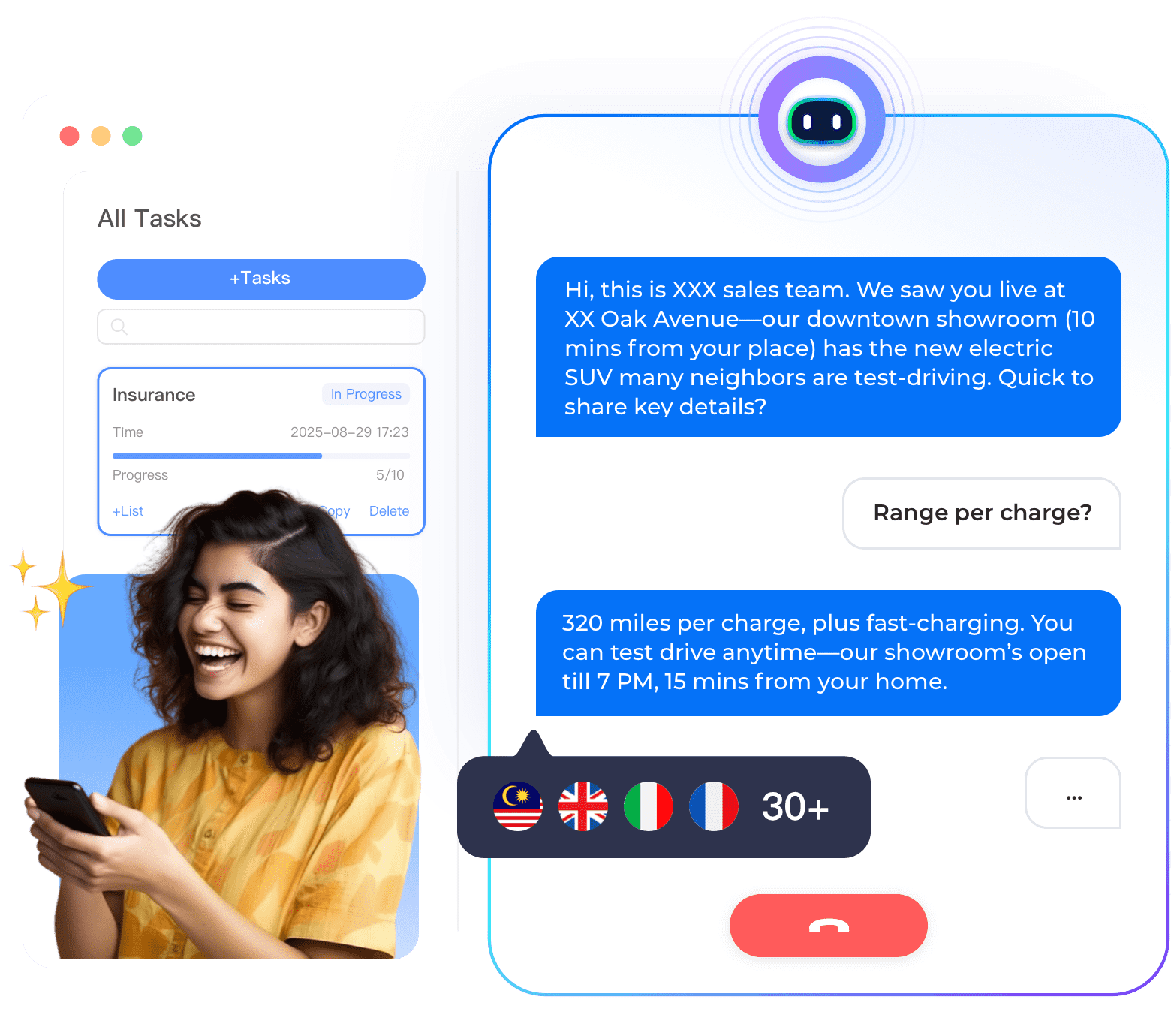
Multilingual capability is often advertised as a headline feature. However, practical multilingual support is more complex than adding language packs. Instadesk’s VoiceBot platform supports more than thirty languages through its ASR and TTS architecture, while combining this with large-model driven multi-turn dialogue.
In one documented deployment involving a global consumer electronics brand, multilingual service expanded to fifteen languages simultaneously. Service-level compliance reached 99.2 percent. This type of operational result reflects not only language processing, but sustained system stability across regions.
Scale Means More Than High Call Volume
It's easy to lose sight of the speed of work. Some platforms only look at how many calls are maid every day. In fact, no matter how many calls you make, it doesn't mean that it's really efficient.

The voice robot on Instadesk has been working non-stop. It can make more than a thousand calls a day. This work takes ten real customer service to finish. It will sift out the bad numbers that can't be reached by itself. The clues are more accurate. Resources are not so wasted. Its advantage is that it combines scale, intelligence, and speaks like a real person. It's not just there to dial desperately.
Whether you can answer many calls at the same time is the standard for distinguishing advanced systems and introductory tools. There is an example of a public utility hotline. That system can catch more than 40 calls at the same time when there are many people. Its greeting is very standard. It can also search for information in the background while talking. This kind of environment for ordinary people needs to be stable. It can't be used for experiments.
Integration Determines Long-Term Impact
Another dimension that often goes unnoticed in comparisons is integration. Voice should not operate in isolation.
In a documented global eyewear brand deployment, customer inquiries from websites, apps, hotlines, social media channels, and email were unified within a single service environment. Voice automation handled notifications and follow-up tasks, while text bots managed repetitive inquiries around the clock.
As a result, service efficiency improved by fifty percent, night-time service delays dropped by eighty percent, and coverage expanded from ten countries to one hundred and ninety-three. These improvements were not driven by voice alone, but by the way voice was embedded into a larger omnichannel framework.
What Actually Defines a Leading VoiceBot Platform in 2026
When comparing VoiceBot platforms in 2026, the strongest solutions are those that balance conversational intelligence with operational resilience. A platform must remain active continuously without overloading human teams. It must support genuine multilingual dialogue rather than scripted translations. It should maintain performance during campaign spikes or public service surges. It needs to connect seamlessly with CRM systems and internal databases so that context flows naturally between channels. Most importantly, performance must be measurable through documented outcomes, not theoretical benchmarks.
Instadesk’s documented deployments show tenfold outbound efficiency improvements, measurable service gains in omnichannel integration, high-concurrency hotline stability, fifteen-language real-time service capability, and 99.2 percent SLA compliance. These figures come from actual implementation cases rather than projections. They illustrate how VoiceBot technology performs under real operating conditions in Southeast Asia.

The competitive landscape will continue evolving, and AI models will become more sophisticated. However, enterprises evaluating the Best VoiceBot Platforms & Tools in 2026 are not choosing based on demo quality alone. They are assessing integration depth, scalability under pressure, multilingual realism, and proven results.
For organizations expanding across Southeast Asia, that combination is no longer a luxury. It is a requirement.
Tags
Share This Article



Issac
Omnichannel Digital Operations: Driving Traffic Growth & Deepening User Value
You may also like

Multilingual Voice Bot vs Monolingual:A Guide for Energy Companies
Energy companies serve diverse customer bases that speak multiple languages.A monolingual voice bot supports only one language,forcing non-native speakers to struggle or seek human agents.A multilingual voice bot can understand and respond in several languages,improving customer experience and reducing agent workload.This article compares multilingual and monolingual voice bots,highlights the benefits of multilingual capabilities for energy utilities,and explains how Instadesk’s platform enables cost-effective multilingual deployment.

Voice Bot Software Comparison:A Guide for Manufacturers
Voice bot software enables manufacturers to automate customer calls for order status,spare parts lookup,warranty checks,and technical support.With many vendors on the market,choosing the right solution requires comparing features like ERP integration,industry-specific AI,deployment options,and pricing.This article compares leading voice bot software—including Instadesk,Five9,Genesys,and Twilio—with a focus on manufacturing needs.It provides a detailed comparison table and selection guidance to help manufacturers make an informed decision.


2026 Intelligent Customer Service Application Guide: For Healthcare Enterprises
This guide explores how intelligent customer service bots help healthcare enterprises solve traditional service pain points, deliver end-to-end resolutions, boost customer loyalty, and build sustainable competitive advantages through effective operating models in 2026.

Get Started in Minutes. Experience the Difference.




WhatsApp Us Now !