What Most Businesses Get Wrong About Omnichannel AI Chatbots
Omnichannel AI chatbots have become a staple of modern customer service, promising unified support, higher efficiency, and consistent experiences across every touchpoint. Yet many businesses invest in these tools only to see lackluster results: disjointed conversations, frustrated customers, unhandled complex requests, and automation rates that fall far short of expectations. More often than not, the issue lies in common misconceptions about what omnichannel AI chatbots actually do—and what they need to succeed. Below are the most widespread mistakes holding teams back from real value.

Mistake 1: Believing “Multi-Channel” Equals “Omnichannel”
The single biggest error is treating separate channel chatbots as a true omnichannel system. Many brands deploy basic bots on email, social media, and web chat separately, with no shared data or context between platforms. Customers who switch from social media to website chat are forced to repeat their issues, and support teams lack a unified view of interactions.
True omnichannel AI doesn’t just exist on every channel—it connects them. For global businesses, this also means supporting cross-cultural communication across major overseas channels, with consistent language capabilities to deliver localized experiences, rather than treating international users as an afterthought.
Mistake 2: Assuming Generic Chatbots Work for Every Industry
Another widespread myth is that one-size-fits-all chatbots can handle the unique demands of different sectors, from cross-border e-commerce and manufacturing to finance. Generic bots lack industry-specific training, so they struggle with niche terminology, complex workflows, and sector-specific customer needs.
High-performing omnichannel AI relies on industry-trained models built on real-world business data. Without exposure to diverse industry scenarios, chatbots cannot resolve specialized inquiries, leaving teams to handle most tasks manually and defeating the purpose of automation.
Mistake 3: Thinking AI Chatbots Only Handle Simple Q&A
Businesses frequently limit their view of AI chatbots to basic FAQs—password resets, hours of operation, and simple product questions. They assume complex tasks like returns, logistics checks, and order changes still require human agents, so they never configure their tools to handle high-value workflows.
Modern omnichannel AI agents can autonomously process complex scenarios when integrated with core business systems such as CRM and ERP platforms. This level of integration allows bots to manage end-to-end processes, significantly reducing reliance on human support for routine but involved tasks.
Mistake 4: Underestimating the Value of Multimodal Interaction
Many teams still use text-only chatbots, unaware that customers increasingly share images, screenshots, and visual details to explain issues. Traditional bots cannot interpret visual information, creating friction in customer service and forcing escalations that could be avoided.
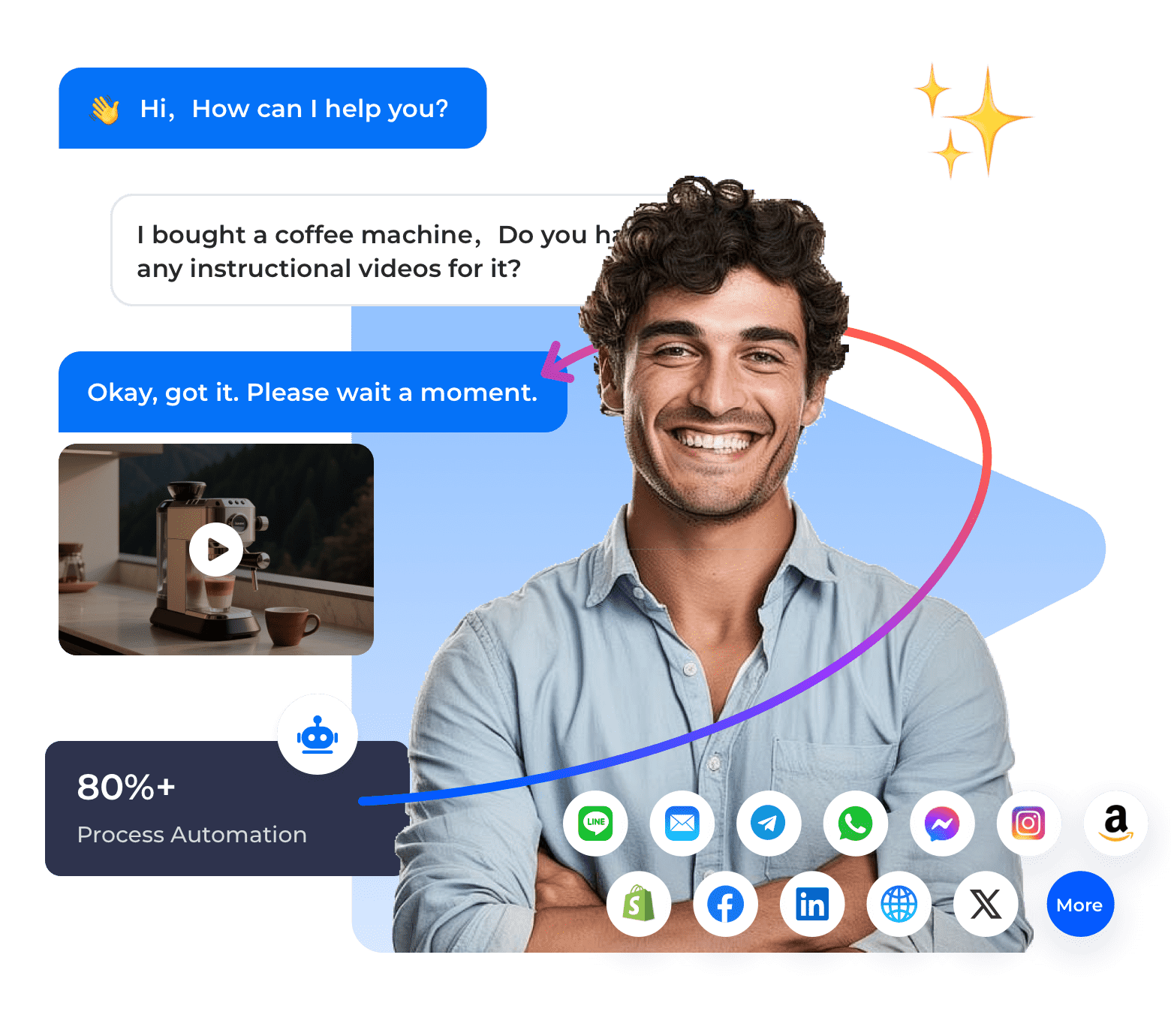
Omnichannel chatbots with multimodal capabilities bridge this gap, supporting both text and visual interactions to handle nuanced, complex customer requests more naturally and accurately.
Mistake 5: Overlooking Deployment Speed and Cold-Start Costs
Businesses often assume building a custom enterprise AI chatbot requires heavy technical resources, long timelines, and high upfront costs. They settle for inflexible, out-of-the-box tools that fail to align with their workflows, rather than seeking solutions designed for fast, low-cost setup.
Visual orchestration changes this by letting teams build tailored AI agents without complex coding, lowering cold-start costs and speeding up implementation while maintaining strong, consistent service experiences.
Building a High-Impact Omnichannel AI Chatbot Strategy
The true power of omnichannel AI chatbots comes from connected, context-aware, industry-aligned capabilities—not just basic automation across channels. Avoiding these common misconceptions helps businesses move beyond fragmented, low-impact tools to build customer service that is efficient, consistent, and truly scalable.
For teams ready to implement a purpose-built omnichannel AI agent that addresses these gaps, Instadesk offers a next-generation chatbot solution powered by large models, visual orchestration, deep industry expertise across 40+ industries, and seamless integration with CRM and ERP systems. The platform is designed to unify customer experiences and automate complex workflows while supporting over 100 languages and 20+ global channels, helping teams achieve high-level automation without unnecessary complexity or delay.
Share This Article


Chris
Senior Customer Service Operations Analyst
You may also like

What is Private Deployment for Enterprise AI Customer Service in Southeast Asia
For companies doing business in Southeast Asia, private deployment has become a very important solution. This is particularly prominent when the customer service system needs to take into account scalability, compliance requirements and data security.


What Is AI Customer Service Chat?A Comprehensive Guide for Financial Institutions
AI customer service chat has emerged as a transformative technology for financial institutions,enabling them to deliver instant,accurate,and compliant support at scale.Unlike traditional rule-based chatbots,AI-powered chat systems use large language models to understand intent,maintain context across conversations,and execute complex actions such as fund transfers or loan inquiries.This article defines AI customer service chat,explains how it differs from conventional chat,outlines its importance for banks and financial services,and demonstrates how Instadesk’s Chatbot provides a secure,high-automation solution for the financial sector.


Retail Business Questions? How to Select the Right Intelligent Customer Service
This article addresses global retail’s core marketing service pain points, introduces Instadesk’s targeted intelligent customer service solutions, provides scenario-based product selection guidelines for different pain points, and clarifies selection priorities and implementation tips for retailers of varying scales, offering a practical digital transformation guide for global retail decision-makers.
Get Started in Minutes. Experience the Difference.