Why E-Commerce Brands Are Automating 80% of Returns with AI Chatbots
For e-commerce customer service teams, returns are the silent killer of productivity. A customer sends a message: “I want to return this shirt, it doesn’t fit.” They attach a photo of the receipt. What happens next is a 5-minute manual process—checking the order, validating eligibility, generating a return label, emailing it to the customer, updating inventory. Do this 50 times a day, and suddenly an entire agent’s shift is gone.
Returns don’t require human judgment. They require execution. That’s why e-commerce brands are handing them to AI chatbots—and automating 80% of the work.

The Problem with Manual Returns
Every return follows the same predictable steps: verify purchase, eligibility, issue label, update records. Simple. Yet in most support teams, these steps are handled manually. Agents toggle between tabs, copy-paste order numbers, and send templated emails. The work is repetitive, error-prone, and eats time that could be spent on complex issues that actually need human attention.
For a mid-sized e-commerce brand handling thousands of returns monthly, the labor cost adds up quickly—without adding any customer value.
How AI Automates End-to-End Returns
AI chatbots change the game by handling the entire returns workflow—from first message to final update—without human intervention.
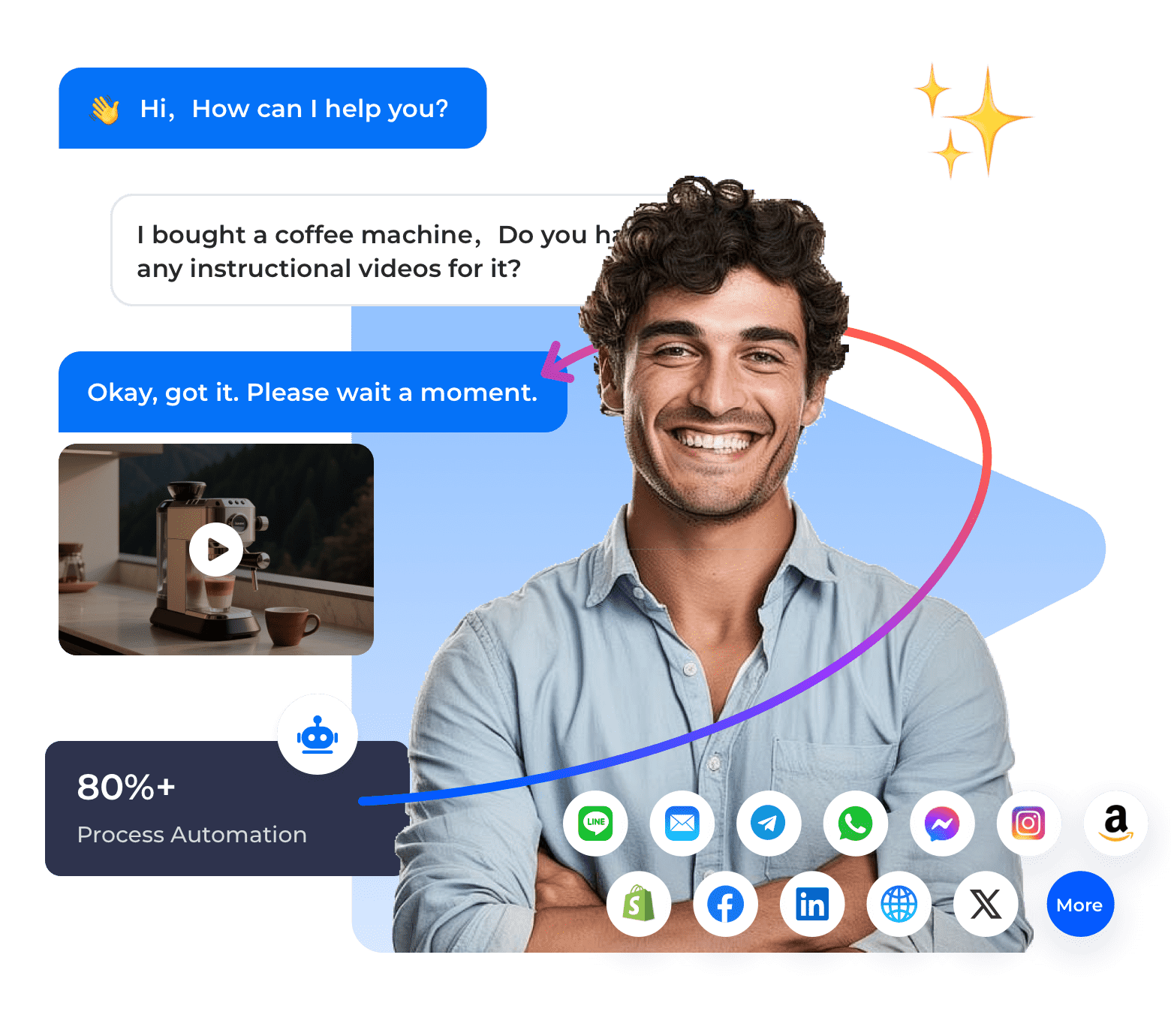
Step 1: Understand the request. A customer sends a WhatsApp message: “Need to return this, it’s too small.” They attach a photo of the receipt. The AI reads the message and extracts the order number from the image.
Step 2: Validate and process. The bot checks the order in your ERP system— s purchase date, verifies it’s within the return window, validates the item qualifies.
Step 3: Execute. If eligible, the AI generates a return label, emails it to the customer, and updates the inventory system. If something doesn’t match, it escalates with full context to a human agent.
Step 4: Close the loop. The CRM is updated, the customer gets ation, and the ticket is resolved. No human touched it. The entire interaction takes seconds.
This is possible because modern AI chatbots integrate directly with CRM and ERP systems. They don’t just answer questions—they act. And with multimodal capabilities, they process images and text together, extracting information from screenshots and receipts automatically.
The Data Behind 80% Automation
E-commerce brands using AI-powered chatbots report dramatic improvements in returns processing:
• 80% of returns are fully automated, from request to resolution
• Average handling time drops from minutes to seconds
• Manual costs are significantly reduced
• Agents are freed to focus on complex inquiries—the 20% of issues that actually require human judgment
Platforms like Instadesk ChatBot deliver these results through deep CRM/ERP integration, multimodal understanding, and visual orchestration that lets business teams configure workflows without coding. With pre-built industry templates and support for 20+ channels (WhatsApp, Facebook, Instagram, Line), e-commerce brands can deploy in days, not months.
What Customers Experience
For customers, the difference is invisible but significant. Instead of waiting hours for a response, they get an instant return label. Instead of copy-pasting order numbers, they simply attach a photo. Instead of frustration, they get resolution.
When returns are seamless, customers buy again with confidence. When returns are painful, they hesitate. Automating returns isn’t just about cost savings—it’s about removing friction from the customer journey.
How to Start Automating Returns
Start with one channel. If most of your returns come through WhatsApp or chat, focus there first. Use pre-built industry templates to launch quickly.
Connect your systems. The AI needs access to your ERP and CRM to validate orders and update records. Ensure seamless integration.
Test, then scale. Run a pilot for one product category or one returns scenario. Measure automation rate and resolution time. Expand from there.
A Smarter Way to Handle Returns
Returns will always be part of e-commerce. They don’t have to consume your support team. With AI chatbots, the 80% that’s predictable, repetitive, and rule-based can happen automatically—freeing your agents to handle the issues that actually need a human touch.
Share This Article


Chris
Senior Customer Service Operations Analyst
You may also like

What Are the Four Types of Chatbots for Retail?
Chatbots have become essential tools for retailers seeking to automate customer service,boost sales,and operate efficiently.However,not all chatbots are created equal.Understanding the four main types of chatbots—rulebased,AIpowered,hybrid,and voiceenabled—helps retailers select the right solution for their specific needs.This article explores each type,its capabilities,and how retailers can leverage them to enhance customer experience and drive revenue.


No More Queues: How Instadesk AI Conversational Bot Creates Zero-Wait Logistics Experience During Peak Season
Peak season brings a surge of customer inquiries that traditional support teams struggle to handle. Instadesk's AI conversational bot eliminates wait times entirely, building a seamless service experience for peak demand. This AI chatbot redefines efficiency for logistics customer support teams.


Why “Office Hours” Don’t Cut It Anymore: The Case for 24/7 AI Customer Service
Traditional 9-to-5 customer service fails today’s round-the-clock customers, causing lost sales and churn. 24/7 AI chatbots provide instant, multichannel support, integrate with business systems, and avoid costly night shifts while meeting modern consumer expectations.
Get Started in Minutes. Experience the Difference.