5 Key Areas to Evaluate Before Buying an AI Chatbot
Choosing a customer service platform is a major decision. Get it right, and your team handles more tickets with less effort. Get it wrong, and you're stuck with a tool that frustrates customers and drains resources.
With dozens of AI chatbot options on the market, how do you separate real capability from marketing hype? The answer lies in asking the right questions. Here are five key areas to evaluate—and the questions that matter most.

1. Intelligence: Beyond Basic Q&A
A chatbot that only answers FAQs isn't enough. Your customers send screenshots of error messages, ask complex multi-step questions, and expect the bot to understand context.
Key questions to ask:
• Can it handle multimodal interactions—text and images together?
• Does it understand intent and context, or just match keywords?
• Can it maintain context across multi-turn conversations?
2. Integration: From Answers to Actions
An AI that can't act is just a talking FAQ. True automation requires the chatbot to connect directly with your business systems—CRM, ERP, order management—so it can execute actions like returns, refunds, and order updates.
Key questions to ask:
• Does it integrate with my existing CRM and ERP?
• Can it initiate actions (returns, refunds, order status) or only provide information?
• Is there a unified workspace for agents to handle both AI and human conversations?
3. Coverage: Channels, Languages, and Scale
Your customers reach out across WhatsApp, Instagram, email, and voice. If your chatbot only works on your website, you're missing most interactions. For global businesses, language support is equally critical.
Key questions to ask:
• What channels does it support? Is it truly omnichannel or just multi-channel?
• How many languages does it handle? Does it support code-switching (mixed-language conversations)?
• Can it scale to handle peak volumes without performance degradation?
4. Speed to Value: Deployment and Iteration
Traditional chatbot projects take months. Requirements gathering, development sprints, testing. By the time it launches, your business needs have changed. Modern platforms let business teams build and iterate without engineering bottlenecks.
Key questions to ask:
• How long does deployment take? Days or months?
• Does it offer pre-built industry templates to accelerate setup?
• Can business teams configure and update the bot without coding?
5. Intelligence Over Time: Learning and Operations
Some chatbots require constant manual updates. Others learn from conversations, automatically refining scripts and surfacing new training needs. The difference is significant for long-term maintenance costs.
Key questions to ask:
• Does the bot improve over time based on real conversations?
• Are there robot operations features that automatically flag training gaps?
• How is data security handled? Are private deployment options available?
The Bottom Line
The right AI chatbot transforms customer service from a cost center into a competitive advantage. The wrong one adds complexity without delivering results.
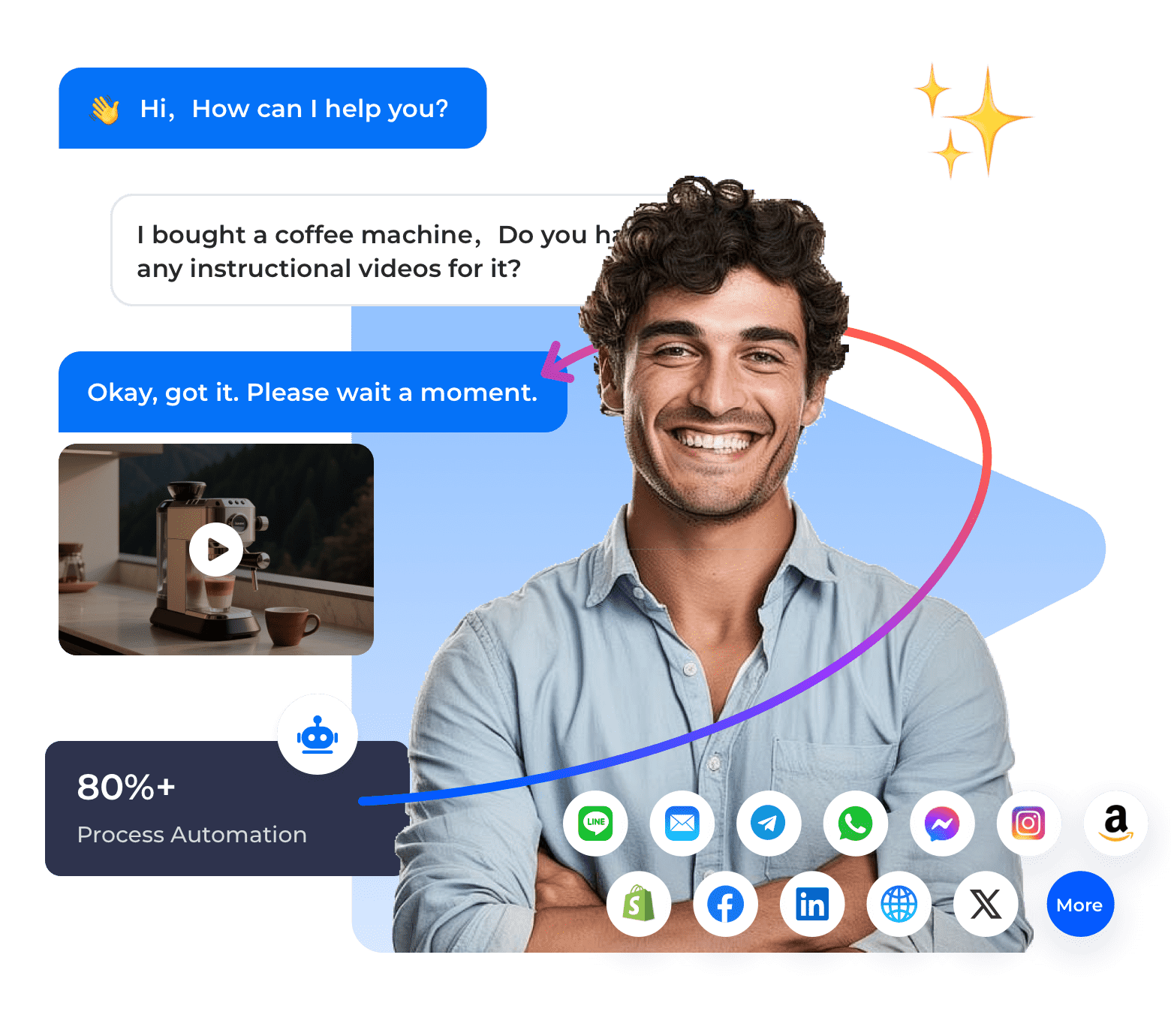
Platforms like Instadesk ChatBot answer these questions with measurable answers: 80% automation rates, 20+ channels unified in one workspace, 100+ languages with real-time translation, zero-code visual orchestration, and pre-built templates across 40+ industries. But the right choice depends on your specific needs.
Before you buy, ask these five questions. The answers will tell you everything you need to know.

Issac
Omnichannel Digital Operations: Driving Traffic Growth & Deepening User Value
You may also like

What is Key Performance Indicator in Scalable Customer Service Systems
Key Performance Indicator (KPI) is a measurable value that shows how effectively a company is achieving its core business objectives. In Southeast Asia’s rapidly evolving digital landscape, businesses are dealing with complex, multilingual, and always-on customer journeys, which makes KPI management far more dynamic than before.

Agent Assistant in the Field: 5 High-Impact AI Use Cases to Transform Retail Industry
This article introduces 5 high-ROI AI use cases for retail customer service powered by Instadesk, covering pre-sale to post-sale scenarios. It highlights measurable business impacts and core values, helping retail brands build efficient, scalable human-AI collaborative service systems.

How to Select Your Intelligent Platform and What's Next: A Guide for AI-Powered Retail Customer Service
This guide explores the pain points of AI application in retail customer service, outlines five non-negotiable criteria for selecting an enterprise AI platform with Instadesk’s advantages, and forecasts key trends like hyper-personalization and proactive service, helping retail brands build scalable AI-powered service models.
Get Started in Minutes. Experience the Difference.