Manual dialing is dying: How AI voicebots are reshaping outbound sales
For decades, outbound sales followed a simple formula: more dials, more meetings, more revenue. Sales reps celebrated hitting “100 calls a day” as a badge of honor. But that math no longer works.
Industry benchmarks show that out of every 100 cold calls, only two or three lead to anything concrete. The other 97 cost time, energy, and morale. Meanwhile, AI-powered outbound solutions are delivering results four times higher. Manual dialing isn’t just inefficient anymore. It’s becoming a competitive liability.

The math that no longer works
The fundamental problem isn’t effort—it’s structure. Sales teams are hired to sell, but research shows they spend only about 30% of their time actually selling. The rest disappears into dialing, waiting for voicemail, data entry, and follow-ups.
Consider the daily reality. A typical sales representative makes 50–80 calls per day but has fewer than ten meaningful conversations. Most of the day is consumed by activities that don’t require human judgment.
The cost compounds. Sales roles consistently rank among the most stressful occupations, with annual turnover rates exceeding 30%. High churn means constant training cycles, inconsistent performance, and institutional knowledge walking out the door every few months.
But here’s the irony: when conversations actually happen, two-thirds result in positive engagement. The problem isn’t closing—it’s reaching someone willing to talk in the first place. Manual dialing has never been good at that.
How AI voicebots change the equation
AI voicebots don’t just dial faster. They fundamentally restructure the outbound motion. While a human rep makes 50–80 calls per day, an AI voicebot can process hundreds of calls concurrently, operating 24/7 without breaks.
The system uses predictive algorithms to determine optimal calling times, detect voicemail versus live answers instantly, and automatically retry unanswered calls. It adjusts conversation flow based on customer responses, detects emotional cues, and speaks naturally with interruptions handled in under two seconds.
The results are clear. In marketing and invitation scenarios, AI voicebots deliver conversion rates significantly higher than traditional approaches. Customer satisfaction jumps when conversations feel natural and personalized. And with AI handling initial outreach, sales teams can focus on what they do best: building relationships and closing deals.
These aren’t marginal improvements. They’re the difference between a sales team that spends its day filtering leads and one that spends it selling.
The cost of waiting
Some leaders still believe manual dialing is “good enough.” But the data suggests otherwise. Teams using AI-assisted outreach are converting at rates that leave manual teams behind. That gap represents pipeline left on the table.
For a mid-sized sales team, the difference isn’t small. Where manual outreach might generate 30 qualified meetings per month, AI-powered outreach could produce well over 100—without adding headcount. The cost structure flips from fixed labor to variable technology spend. And sales reps stop doing the work machines can do and start doing what only humans can.
For sales teams still relying on manual dialing, the competitive disadvantage grows every quarter. Every month spent waiting is a month competitors spend accelerating.
From manual to intelligent
Manual dialing isn’t obsolete because technology is new. It’s obsolete because the economics no longer make sense. A model that requires 100 dials to produce a handful of conversations and leaves most of a sales rep’s time on non-selling activities isn’t a system. It’s a drag on growth.
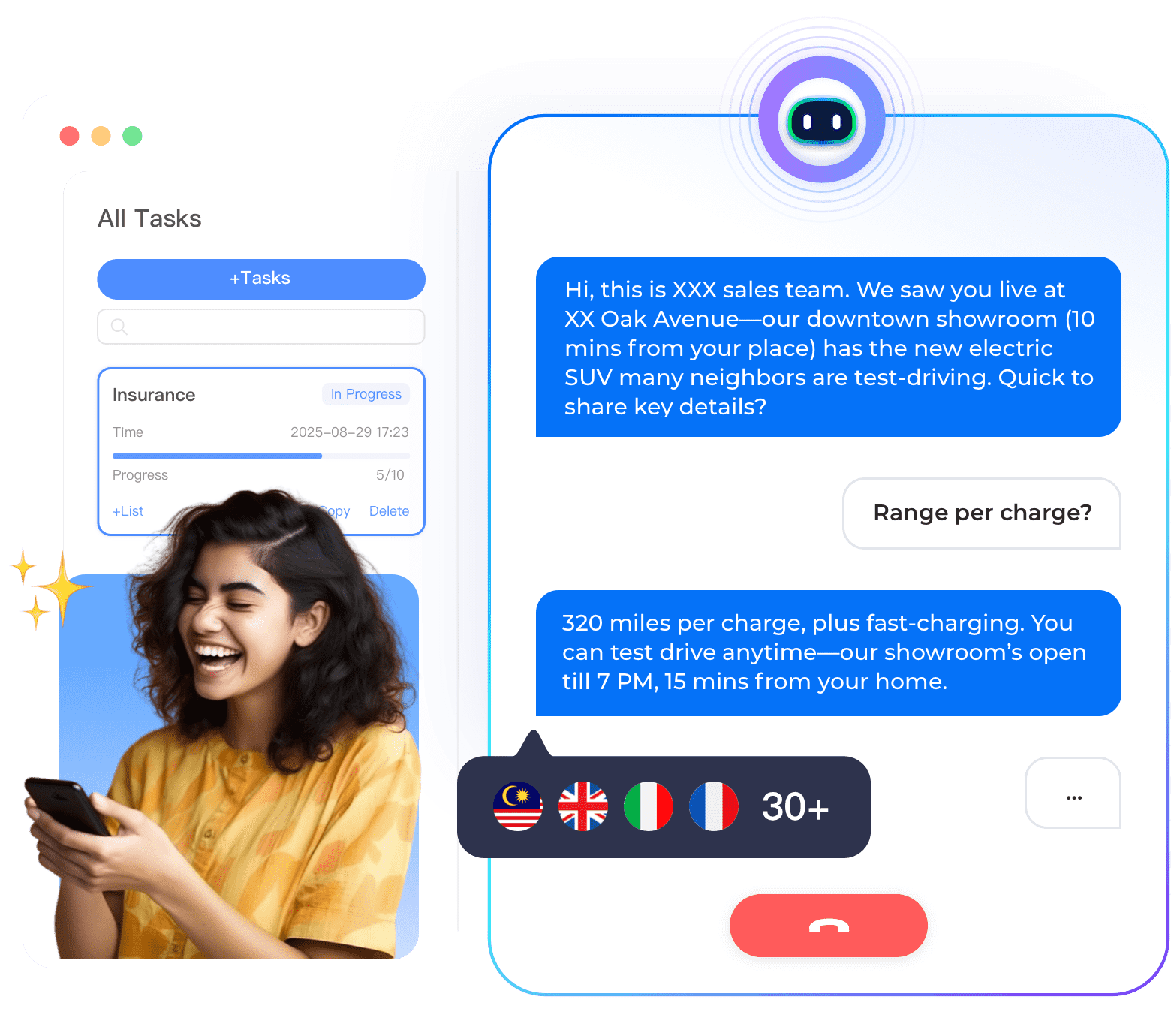
Instadesk VoiceBot was built for this transition—combining 30+ languages with native code-switching, full-duplex conversation with <2-second interruption handling, and zero-code visual orchestration that deploys in days. With pre-built industry templates across finance, healthcare, retail, and education, it helps teams move from manual dialing to intelligent conversation at scale. The question isn’t whether to adopt AI voice—it’s how quickly.
Tags
Share This Article


Chris
Senior Customer Service Operations Analyst
You may also like

3 Proven LLM Use Cases in Wealth Management & Practical Recommendations For You
This guide shares three proven LLM use cases in wealth management from Instadesk, their key capabilities and outcomes. It also provides practical recommendations for decision-makers to embed LLMs into core workflows, drive efficiency, and enhance client experiences in 2026.


What is a Large Language Model (LLM)? How to Apply It in Wealth Management?
This guide explains LLMs, their 2026 global trends, and practical applications in wealth management. It outlines a 4-phase LLM cycle, key features tailored to the industry, real use cases, and Instadesk’s competitive advantages. It helps firms leverage LLMs to enhance client service, streamline operations, and scale capabilities.

AI Outbound for Real Estate Lead Generation
This article addresses real estate agents’ cold-calling inefficiencies, explains how AI outbound voicebots automate prospecting, qualify leads, and schedule appointments, highlights measurable benefits, and showcases Instadesk’s VoiceBot for easier qualified lead generation.

Get Started in Minutes. Experience the Difference.