5 key capabilities every enterprise chatbot should have in 2026
The global AI customer service market is projected to reach $15.12 billion in 2026. By 2030, AI is expected to handle 80% of routine customer interactions. Gartner forecasts that 40% of enterprise applications will integrate AI agents by the end of 2026.
With dozens of platforms entering the market, the cost of choosing the wrong one is high. This guide outlines five non negotiable capabilities every enterprise chatbot must have.

1. Omnichannel coverage
Your customers don’t think in channels. They start on WhatsApp, follow up by email, and might reach out on Instagram—all for the same issue. Yet many chatbots still operate in silos, forcing customers to repeat themselves.
Ten years ago, 73% of customer traffic went through a single channel. By 2025, that dropped to 2.3%—nearly 98% of interactions now span multiple channels.
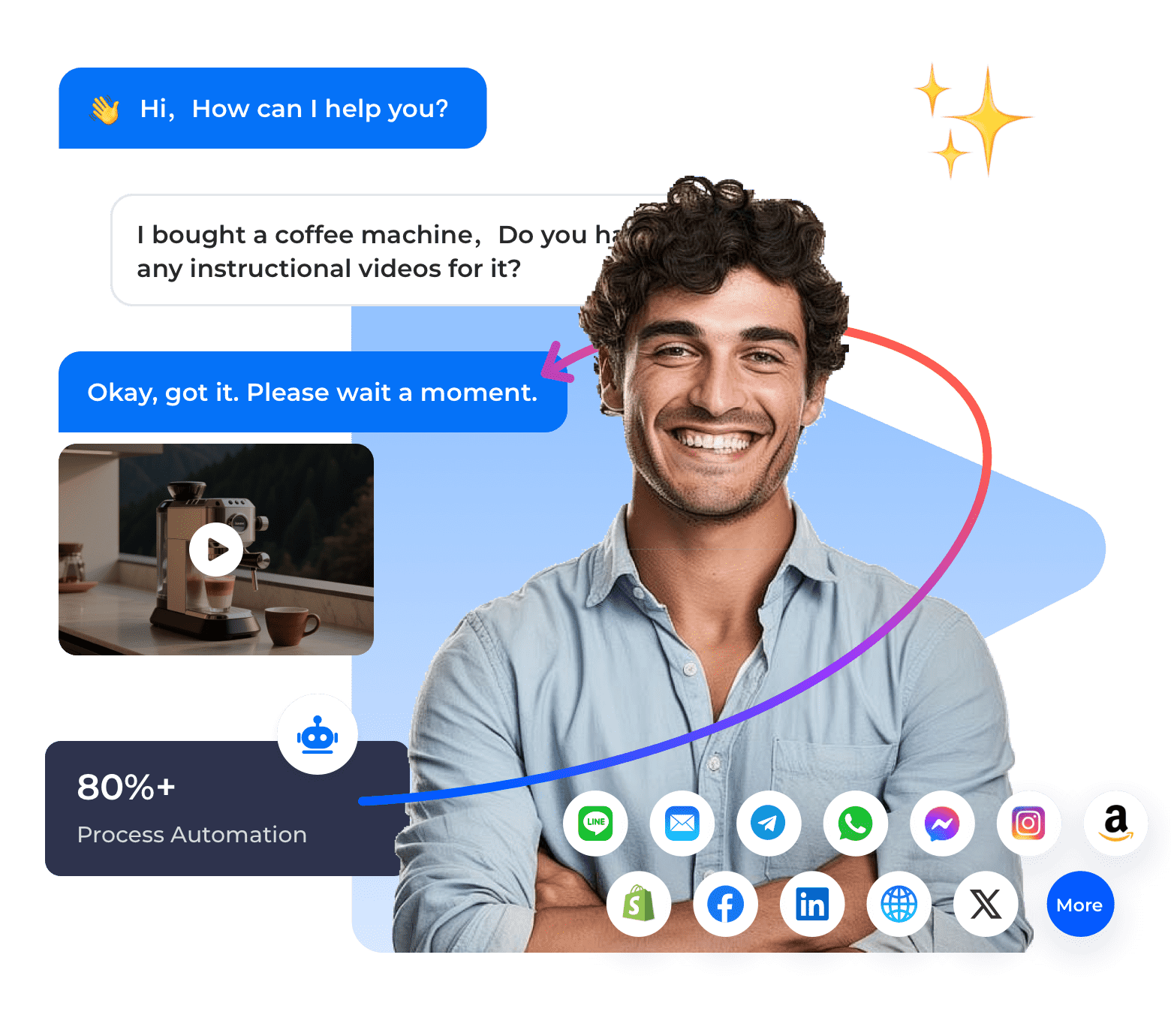
What to look for: A platform that unifies all channels into a single workspace—email, live chat, WhatsApp, Line, Instagram, and phone. Agents should see the full conversation history regardless of where it started.
2. Multilingual fluency
Language barriers directly hurt revenue. Research shows 76% of consumers prefer buying in their native language, and 29% of businesses have already lost customers due to poor multilingual support. Translation layers fail at code switching—where customers naturally mix languages mid sentence (“I need to check my order, tetapi saya lupa nombor tracking”).
What to look for: Native multilingual understanding with real time translation across 100+ languages. The system should handle mixed language conversations naturally, adapting to local communication habits.
3. Deep business system integration
A chatbot that answers FAQs is useful. A chatbot that takes action is transformative. Enterprises that integrate chatbots with core CRM and ERP systems see 35% higher first call resolution rates.
What to look for: The ability to execute actions—check real time order status, validate returns, generate labels, update inventory, and sync leads to your CRM. When a customer asks “Where’s my order?” the system should check your ERP and respond with live data. If the chatbot only answers questions but can’t act, it’s a talking FAQ—not automation.
4. Multimodal interaction
Customers don’t always describe problems in words. They send screenshots, photos of damaged products, scans of receipts. A text only chatbot fails the moment a customer attaches an image.
By 2028, 80% of foundation models for production use cases will include multimodal capabilities.
What to look for: The ability to process text and images together—extracting information from receipts, recognizing products from photos, and initiating claims without requiring written descriptions.
5. Zero code deployment
Traditional AI projects take months. By the time they launch, business needs have changed. Gartner forecasts that by 2027, no code AI platforms will handle 80% of enterprise AI application development.
What to look for: Visual orchestration with drag and drop configuration, pre built industry templates (for manufacturing, e commerce, finance), and automated operations that surface training gaps. Deployment should take days, not months.
Platforms with pre built templates validated through real production deployments, plus robot operations that automatically remind teams when training materials need updates, reduce cold start costs and accelerate time to value.
A framework for smarter evaluation
Using these five capabilities as your evaluation framework cuts through the noise. Ask each vendor: Does your platform cover all our channels? Can it handle mixed languages natively? Does it integrate with our CRM and ERP? Can it process images alongside text? Can we deploy without developers?
The answers will separate platforms ready for 2026 from those still catching up.
Share This Article


Chris
Senior Customer Service Operations Analyst
You may also like

Customer Service Automation Meaning:A Guide for Telecom Operators
Customer service automation refers to the use of technology—including AI chatbots,voicebots,and workflow automation—to handle customer interactions without human involvement.It automates routine inquiries,resolves common issues,and escalates complex cases to human agents when needed.For telecom operators managing millions of billing questions,technical support requests,and outage reports,automation is essential for improving efficiency and customer satisfaction.This article defines customer service automation,explains how it differs from traditional support,outlines its importance for telecom operators,provides implementation guidance,and demonstrates how Instadesk’s Chatbot platform delivers automation capabilities.


Cutting through the complexity: How visual orchestration is changing AI deployment for good
Visual orchestration uses drag-and-drop, no-code interfaces to let business teams build and launch AI agents in days instead of months. It cuts deployment costs, speeds up iterations, and enables continuous self-optimization — solving the IT backlog bottleneck in traditional AI projects.

The AI-Driven Success Story: How IMOU Set a New Global Customer Service Standard
Expanding a smart home brand to over 100 countries brings incredible opportunities. It also creates massive customer service hurdles. IMOU, with more than 45 million users worldwide, faced these challenges directly. The company needed to serve customers across 20 different communication channels. These included social media, local platforms, e-commerce messaging, email, and phone calls. Managing each channel separately was draining resources and slowing down response times significantly.

Get Started in Minutes. Experience the Difference.