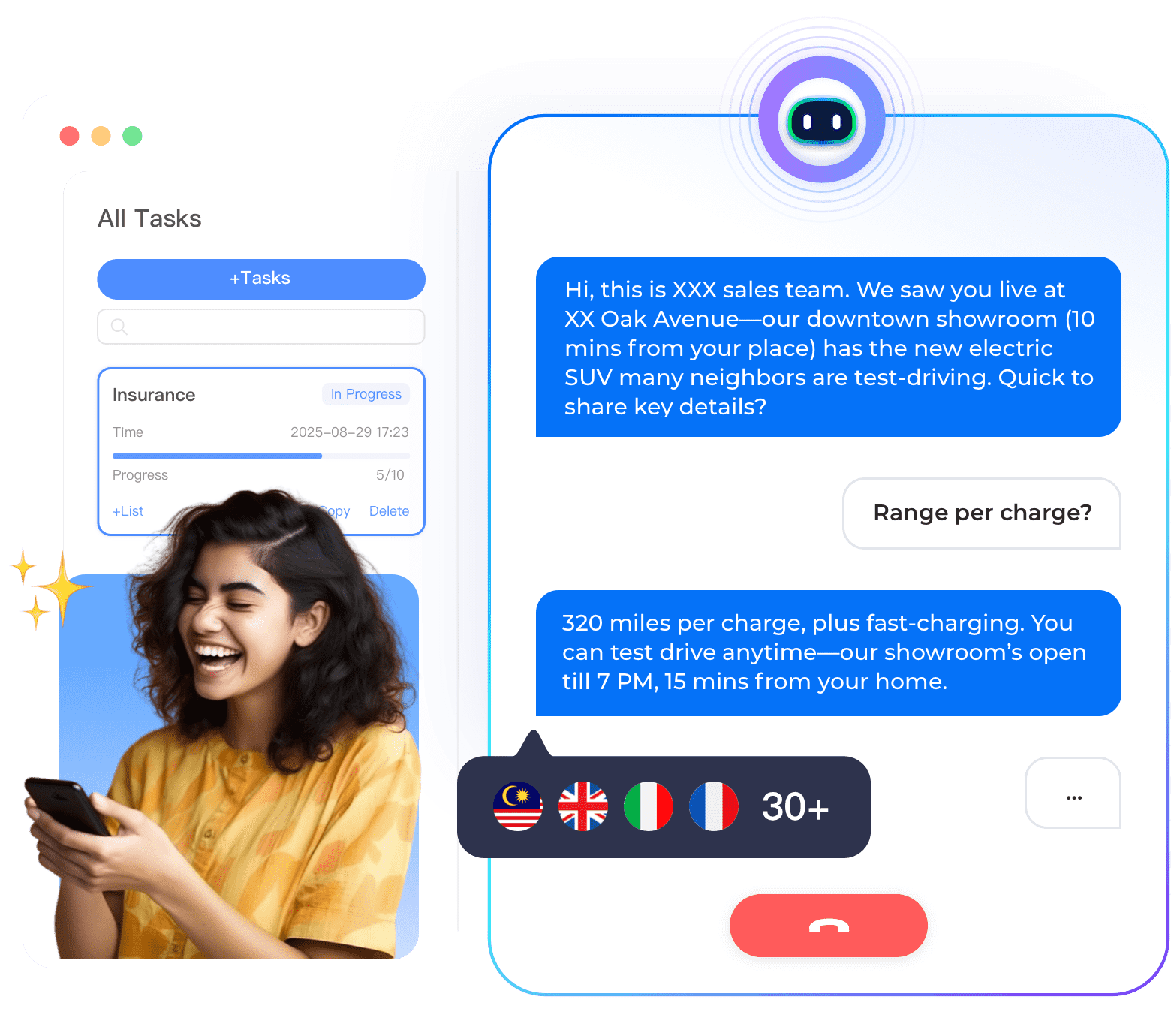
More and more logistics enterprises are adopting LLM-powered voice bots to promote global expansion, but 60% of them face landing difficulties: long implementation cycle, poor scenario adaptation, and failure to achieve expected cost reduction effects.
The root cause is not the technology itself, but the lack of practical implementation methods and scenario-based guidance. Many enterprises copy generic AI implementation experience, ignoring the uniqueness of cross-border logistics scenarios.
Based on 2 real cases of Instadesk LLM-powered voice bots serving global logistics enterprises (covering Southeast Asia and North American markets), this guide focuses on case details, analyzes implementation key points and risk avoidance, helping you avoid detours and achieve smooth landing.
Why Logistics Enterprises Fail in AI Voice Bot Implementation
Before diving into the cases, it is crucial to clarify the common failure causes—this can help you avoid 80% of the pits and better understand the value of Instadesk’s solutions in the following cases.
Through sorting out dozens of logistics enterprise cases, we summarize 4 core failure reasons:
Ignoring Logistics Scenario Customization: Using generic AI voice bots without adapting to cross-border logistics scenarios (customs clearance, overseas warehouses, freight quotation), leading to low response accuracy.
Unclear Implementation Goals: Lack of clear KPIs (e.g., cost reduction ratio, customer acquisition efficiency), making it impossible to verify implementation effects.
Poor System Integration: Failure to connect with existing ERP, CRM, and overseas warehouse management systems, resulting in data silos and inefficient workflows.
Neglecting Team Adaptation: Not training front-line and management teams, leading to poor human-machine collaboration and failure to give full play to the robot's value.
The following two cases fully demonstrate how Instadesk solves these core pain points, combining logistics scenario characteristics to provide end-to-end implementation services and help enterprises achieve successful landing.
2 Real Cases: Instadesk Implementation Effects in Global Logistics
The two cases cover different expansion stages (initial expansion and rapid expansion) and regional markets (Southeast Asia and North America), providing targeted reference for logistics enterprises with different global expansion needs.
Case 1: Southeast Asia Initial Expansion (Small-to-Medium Logistics Enterprise)
Enterprise Background:
A Chinese logistics enterprise focusing on Southeast Asia, with 50+ employees, mainly providing cross-border e-commerce logistics services. Before adopting Instadesk, the enterprise relied on manual customer service to handle order inquiries, facing high overseas labor costs and slow response speed, which seriously affected customer retention.
Implementation Goals:
Reduce overseas customer service labor costs by 50%, improve order inquiry response efficiency by 60%, and ensure basic multilingual service capability in Southeast Asian markets.
Instadesk Solution:
Deploy basic LLM voice bot, customize Southeast Asian multilingual (English, Thai, Indonesian) module to adapt to local language habits; connect with the enterprise’s simple order management system to realize real-time order information retrieval; build a basic Southeast Asian logistics knowledge base, covering common freight standards and customs clearance tips.
Implementation Process & Key Points:
The whole implementation cycle was 8 weeks. In the early stage (1-2 weeks), we ed the core scenario (order inquiry) and quantified KPIs together with the enterprise; in the middle stage (3-6 weeks), we completed system integration, knowledge base construction and model training; in the later stage (7-8 weeks), we carried out pilot debugging and team training to ensure smooth landing.
Implementation Effect:
After 3 months of formal operation, the enterprise’s overseas customer service labor cost was reduced by 58%, exceeding the expected goal; the order inquiry response time was shortened from 15 minutes to 1 minute, and the response accuracy reached 88%; customer satisfaction increased by 42%, and the customer retention rate was significantly improved.
Key Takeaways:
For enterprises in the initial expansion stage, the key to successful implementation is to focus on core scenarios (avoid blind full-scale deployment), prioritize multilingual adaptation and simple system integration, and control implementation costs while ensuring basic service capabilities.
Case 2: North America Rapid Expansion (Medium-Sized Logistics Enterprise)
Enterprise Background:
A logistics enterprise with multi-region layout, focusing on the North American market, with 200+ employees, mainly providing FBA head transportation and overseas warehouse services. The enterprise needed to expand overseas customer acquisition channels, but the manual outbound team had low efficiency and high costs, and could not meet the demand for large-scale customer acquisition.
Implementation Goals:
Expand overseas customer acquisition channels, complete 10,000+ outbound calls monthly, improve intent customer conversion rate by 30%, and realize real-time monitoring of customer acquisition data.
Instadesk Solution:
Deploy enterprise-level LLM voice bot, focus on the outbound marketing scenario; build a North American logistics knowledge base, covering local customs policies, FBA operation rules and freight quotation standards; integrate with the enterprise’s CRM system to realize real-time synchronization of call data and customer information; enable real-time call data analysis function to monitor call completion rate and intent conversion rate.
Implementation Process & Key Points:
The whole implementation cycle was 12 weeks. We first sorted out the enterprise’s historical outbound call data and customer pain points (1-2 weeks); then completed system integration with CRM and knowledge base construction (3-8 weeks); carried out targeted model training according to North American customer communication habits (9-10 weeks); finally launched pilot deployment in the Western United States, optimized according to pilot data, and then carried out full-scale launch (11-12 weeks).
Implementation Effect:
After 6 months of formal operation, the enterprise’s monthly outbound calls reached 12,000+, exceeding the expected goal; the intent customer conversion rate increased by 35%, and the customer acquisition cost was reduced by 40%; the real-time data analysis function helped the enterprise adjust outbound strategies in a timely manner, further improving customer acquisition efficiency.
Key Takeaways: For enterprises in the rapid expansion stage, the key to successful implementation is to focus on customer acquisition efficiency, build industry-specific knowledge base to improve professionality, integrate with CRM system to realize data closed-loop, and use data analysis to optimize implementation effects.
Common Risk Points & Avoidance Methods in Case Implementation
Combined with the above two cases, we summarize 3 key risk points that are easy to appear in the implementation process of logistics enterprises, and provide targeted avoidance methods, which can be directly referenced in your implementation process.
|
Risk Point
|
Case Performance
|
Avoidance Method
|
|
Low response accuracy
|
Case 1 initially had 65% accuracy, optimized to 88% after adjustment
|
Build region-specific logistics knowledge base; optimize model with real call cases
|
|
System integration failure
|
Case 2 initially had data synchronization lag, solved by Instadesk technical team
|
Choose a platform with rich logistics system integration experience (e.g., Instadesk); conduct pre-integration testing
|
|
Team adaptation difficulty
|
Both cases had front-line staff unfamiliar with human-machine collaboration initially
|
Conduct pre-launch training; establish clear human-machine collaboration norms; arrange special personnel to answer questions
|
Conclusion
For logistics enterprises expanding globally, the successful implementation of LLM-powered voice bots relies on scenario-based adaptation and practical experience, and the two Instadesk cases above provide a complete reference for you.
Whether you are in the initial expansion stage (focusing on cost reduction and basic service) or the rapid expansion stage (focusing on customer acquisition efficiency), Instadesk can provide tailored solutions, combining logistics industry characteristics to solve core pain points such as high cost, low efficiency and poor adaptation.
The key to successful landing is not to pursue blind technological upgrading, but to combine your enterprise’s actual expansion needs, learn from mature case experience, and avoid common pits. With Instadesk’s full-process technical support and logistics-specific solutions, you can quickly realize the value of AI voice bots and gain a competitive advantage in the global logistics market.