What Is Professional Training and How Intelligent Training Transforms Financial Services
What is professional training?
Professional training is a structured process designed to develop the knowledge, skills, and competencies required for individuals to perform effectively in their roles. Unlike general education, professional training is job-specific, practical, and focused on enabling immediate application. In financial services, professional training encompasses regulatory compliance, product knowledge, sales techniques, and customer service skills.

Professional training vs. Education: What's the difference?
|
Aspect
|
Education
|
Professional Training
|
|
Purpose
|
Broad knowledge foundation
|
Job-specific competence
|
|
Focus
|
Theory, concepts
|
Practical application
|
|
Duration
|
Long-term (years)
|
Short-term (hours to months)
|
|
Assessment
|
Academic evaluation
|
Performance-based competency
|
|
Outcome
|
Degree, certification
|
Job readiness, proficiency
|
Both are important, but professional training directly impacts job performance and business outcomes.
Why professional training matters in financial services
Financial services professionals must navigate:
• Complex regulations: Dodd-Frank, Reg E, Truth in Lending, FINRA rules—the list is extensive and constantly evolving.
• Diverse products: From basic checking accounts to complex investment products, agents must understand everything.
• Sensitive situations: Discussing finances, fraud, and collections requires both knowledge and emotional intelligence.
• High stakes: Errors can lead to regulatory fines, legal liability, and lost customer trust.
• Rapid change: New products, regulations, and technologies emerge constantly.
Effective professional training delivers:
• Regulatory compliance: Well-trained staff make fewer errors and avoid violations.
• Customer satisfaction: Knowledgeable, confident agents provide better service.
• Agent retention: Investment in development improves job satisfaction and reduces turnover.
• Revenue growth: Skilled agents identify cross-sell opportunities and close more sales.
How to design effective professional training in financial services
• Identify competency gaps: Assess current skills against role requirements.
• Use blended learning: Combine self-paced content, instructor-led sessions, and hands-on practice.
• Incorporate realistic scenarios: Practice with simulations that mirror real customer interactions.
• Provide immediate feedback: Learners need to know what they did well and where to improve.
• Measure outcomes: Track performance improvements and business impact.
• Continuous reinforcement: Learning doesn't end with initial training; ongoing coaching is essential.
How Instadesk Intelligent Training transforms professional training for financial services
Instadesk's Intelligent Training platform revolutionizes how financial institutions develop their people:
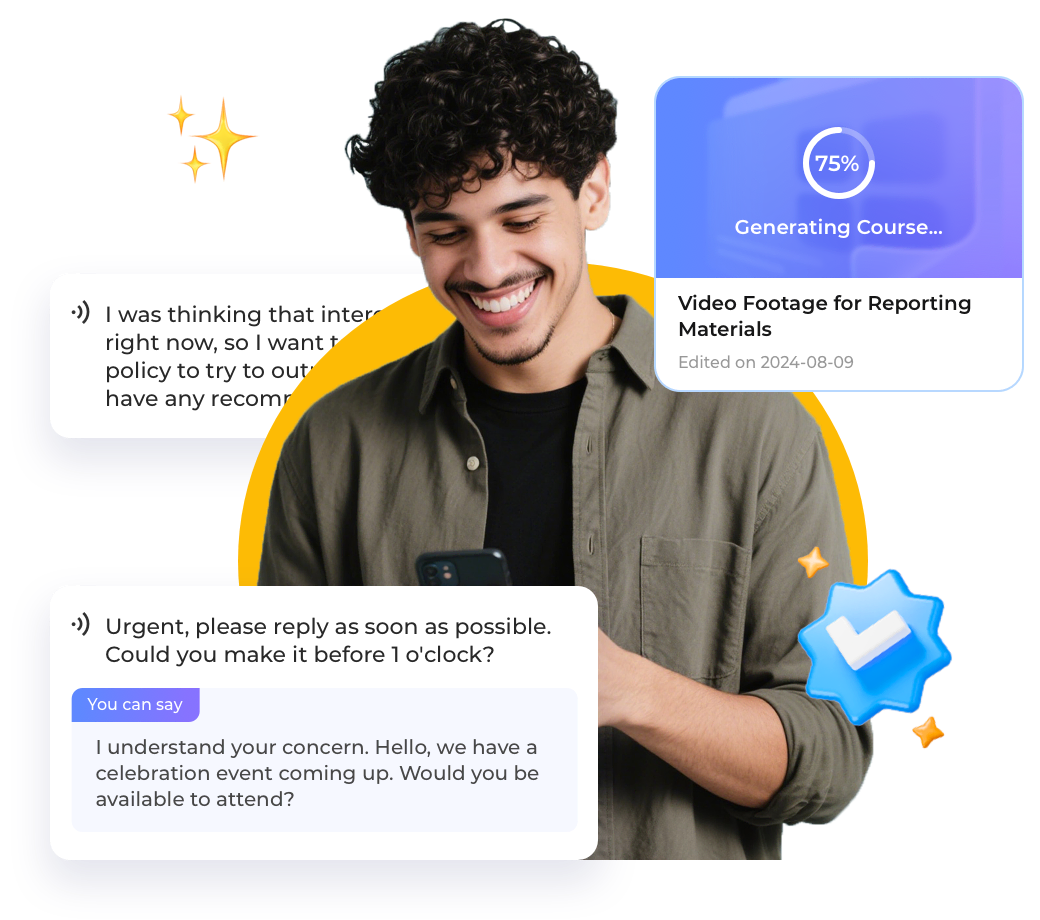
• AI-powered simulations: Agents practice with virtual customers in realistic scenarios—handling a fraud report, explaining a loan denial, cross-selling a credit card.
• Personalized learning paths: AI identifies each learner's knowledge gaps and recommends specific training modules.
• Real-time feedback: After each simulation, learners receive detailed coaching on accuracy, compliance, tone, and empathy.
• Regulatory reinforcement: Scenarios embed regulatory requirements, ensuring agents internalize proper disclosures.
• Progress tracking: Managers see skill development across teams and target coaching where needed.
• Safe practice environment: Learners build confidence without risking real customer relationships.
Frequently asked questions
Q: How does simulation-based training compare to traditional role-play?
A: Simulations provide consistent scenarios, immediate feedback, and unlimited repetition—all at scale. Traditional role-play is valuable but harder to standardize.
Q: Can AI really teach soft skills like empathy?
A: AI can't replace human coaching, but simulations with feedback help agents practice and internalize empathetic responses in a safe environment.
Q: How do we measure training effectiveness?
A: Track pre• and post-training performance metrics, certification completion, and downstream business results like customer satisfaction and compliance rates.
Professional training is essential for financial services organizations to maintain compliance, deliver excellent service, and retain talent. Instadesk's Intelligent Training platform accelerates skill development, ensures consistency, and provides measurable results.
Tags

Issac
Omnichannel Digital Operations: Driving Traffic Growth & Deepening User Value
You may also like

What is AI-Powered Sales Coaching? A Modern Approach to Onboarding and Skill Development
AI-powered sales coaching uses realistic simulated customer conversations for interactive practice, delivering instant feedback and personalized learning paths. It fixes traditional training flaws, speeds up onboarding, boosts team skills and lowers turnover.

Align Training with Business Goals: Intelligent Training for Smarter Management
Modern managers struggle to align team training with core business goals. Traditional programs are slow, hard to measure, and disconnected from performance. Instadesk Intelligent Training closes this gap fully. Instadesk Intelligent Training links learning directly to business outcomes. It brings clarity and control to team development.

Practice Smarter, Perform Stronger with Intelligent Training
Traditional corporate training often wastes time and resources with slow content creation, weak practice, and unclear results. Instadesk Intelligent Training changes these problems. It uses next generation large models for real scene 1V1 practice. Instadesk Intelligent Training delivers timely feedback and fast role readiness and helps teams practice smarter and perform stronger every day.
Get Started in Minutes. Experience the Difference.