Voice Bot for Healthcare Patient Follow-Up:A Guide for Medical Providers
Healthcare providers face growing demands for patient engagement—appointment reminders,post-discharge follow-up,medication adherence checks,and preventive care outreach.A voice bot—an AI-powered voicebot—enables healthcare organizations to automate these interactions,improving patient outcomes while reducing administrative burden.Unlike manual calling,which is resource-intensive and inconsistent,voice bots deliver personalized,compassionate conversations at scale.This article explores how healthcare providers can leverage voice bots for patient follow-up,the benefits over traditional methods,and how Instadesk’s VoiceBot platform supports healthcare engagement.

The Healthcare Patient Engagement Challenge
Healthcare providers face unique engagement challenges:
•High Volume:Hospitals and clinics handle thousands of patient interactions daily—appointment reminders,discharge follow-up,medication adherence.
•Resource Constraints:Clinical staff are already overburdened;administrative calls consume valuable time.
•Patient Outcomes:Follow-up calls improve adherence and reduce readmission rates,but manual calling is not scalable.
•Regulatory Compliance:Healthcare communications must comply with HIPAA and other privacy regulations.
•Multilingual Needs:Providers serve diverse patient populations who speak many languages.
What Is a Voice Bot for Patient Follow-Up?
A voice bot is an AI-powered voicebot that conducts automated patient calls for follow-up,reminders,and outreach.Unlike simple appointment reminder systems that play pre-recorded messages,voice bots engage in natural conversations,asking questions,listening to responses,and adapting based on patient needs.They can handle thousands of calls simultaneously,ensuring every patient receives timely follow-up.
How Voice Bots Differ from Manual Patient Calling
| Aspect | Manual Patient Calling | Voice Bot |
| Scale | Limited by staff availability | Thousands of calls simultaneously |
| Consistency | Varies by caller | Consistent, scripted outreach |
| Cost per Call | High (clinical/admin wages) | Low (automated) |
| Availability | Business hours | 7/24 |
| Data Capture | Manual entry | Automated data capture |
| Language Support | Limited by staff | Multilingual, real-time translation |
Why Voice Bots Matter for Healthcare Follow-Up
•Improved Patient Outcomes:Automated follow-up ensures patients receive timely reminders,medication adherence checks,and post-discharge support,reducing readmission rates.
•Reduced Administrative Burden:Automating routine calls frees clinical and administrative staff to focus on direct patient care.
•Scalable Outreach:Healthcare systems can reach all patients,not just a sample,improving population health management.
•Consistent Messaging:Every patient receives the same accurate,compliant information.
•24/7 Availability:Patients can receive calls at convenient times,improving engagement.
•Multilingual Support:Serve diverse patient populations with automated translation and multilingual voice.
Key Use Cases for Healthcare Voice Bots
•Appointment Reminders:Confirm appointments,provide instructions,and allow rescheduling.
•Post-Discharge Follow-Up:Check on patients after hospital discharge,identify complications early,and provide recovery guidance.
•Medication Adherence:Remind patients to take medications, adherence,and identify barriers.
•Preventive Care Outreach:Remind patients about annual check-ups,screenings,and vaccinations.
•Patient Satisfaction Surveys:Collect feedback on care experiences to improve service.
•Chronic Care Management:Regularly check in with patients managing chronic conditions,providing support and education.
How to Implement Voice Bots for Healthcare Follow-Up
Implementation requires careful attention to clinical workflows and compliance:
•Identify High-Impact Use Cases:Start with high-volume,high-impact calls—appointment reminders,post-discharge follow-up.
•Develop Scripts with Clinical Input:Ensure scripts are clinically appropriate,compassionate,and accurate.
•Ensure HIPAA Compliance:Select a platform with robust security,encryption,and HIPAA-compliant features.
•Integrate with EHR:Connect to electronic health records to access patient data and document call outcomes.
•Test and Refine:Deploy with a pilot group,monitor patient engagement,and refine scripts based on feedback.
•Scale Across Organization:Expand to additional use cases and departments based on success.

How Instadesk’s VoiceBot Supports Healthcare Follow-Up
Instadesk’s VoiceBot platform is purpose-built for healthcare,offering scalable patient outreach,HIPAA-compliant security,and integration with EHR systems.
Key features for healthcare include:
•HIPAA-Compliant Platform:Robust security,encryption,access controls,and business associate agreements.
•Scalable Outreach:Handle thousands of patient calls simultaneously—appointment reminders,post-discharge follow-up,medication adherence.
•Natural Conversations:VoiceBot engages in natural,compassionate conversations,asking questions and adapting to patient responses.
•EHR Integration:Connect to electronic health records to access patient data and document call outcomes.
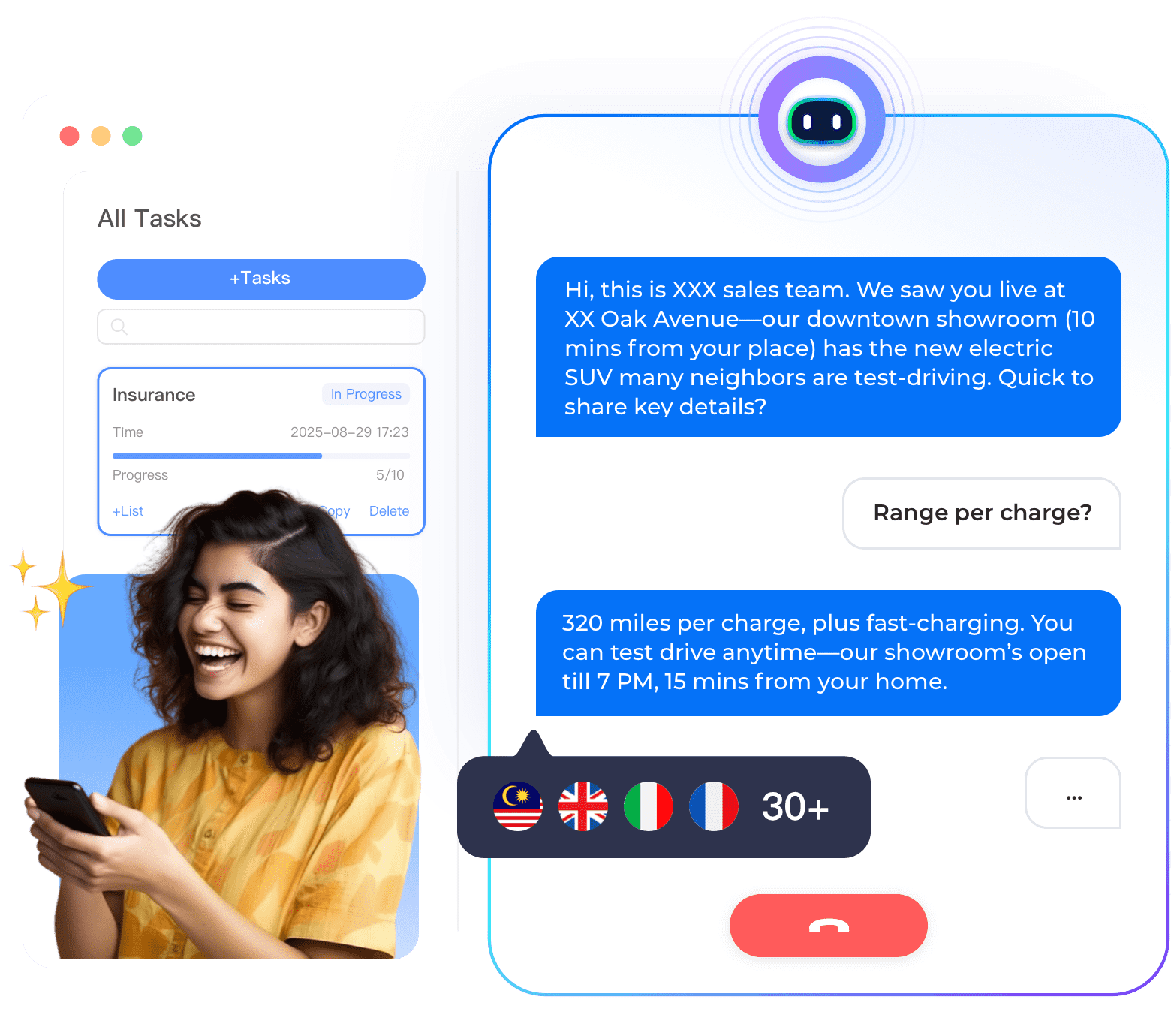
•Multilingual Support:Serve diverse patient populations with real-time translation in 30+languages.
•Compliance Monitoring:Automated recording and audit trails for regulatory review.
Case Study:Hospital System Reduces Readmissions by 25%
A large hospital system deployed Instadesk’s VoiceBot for post-discharge follow-up.Results after 9 months:
•Follow-Up Rate:95 percent of discharged patients received follow-up calls within 48 hours.
•Readmission Rate:Reduced by 25 percent through early identification of complications and medication adherence support.
•Staff Time:Administrative staff saved 20 hours weekly,redirected to direct patient care.
•Patient Satisfaction:Scores increased by 15 percent with timely,compassionate follow-up.
Conclusion
Voice bots are transforming healthcare patient follow-up by enabling scalable,compassionate outreach that improves outcomes while reducing administrative burden.By automating appointment reminders,post-discharge follow-up,and medication adherence checks,healthcare providers can engage more patients,identify issues early,and deliver better care.Instadesk’s VoiceBot platform delivers the HIPAA-compliant,scalable capabilities that healthcare organizations need to succeed in an increasingly patient-centered environment.
Share This Article


Liyana
Master's Degree Bilingual Content Specialist
You may also like

What Global Consumers Told Us About AI Customer Service, and What It Means for Your Business
This article explores global consumers’ demands for AI customer service, identifies key cross‑border support pain points, and shows how Instadesk’s omnichannel AI solutions deliver 24/7 multilingual help, automate workflows, ensure compliance, and drive higher satisfaction, lower costs, and scalable global growth for international brands.


Voice Robot for Fintech Customer Acquisition:A Guide for Financial Technology Companies
Fintech companies operate in a highly competitive landscape where customer acquisition costs are rising and conversion rates are under pressure.A voice robot—an AI-powered voicebot—enables fintechs to scale outbound outreach,engage prospects in natural conversations,and convert leads into customers efficiently.Unlike traditional outbound calling,which is labor-intensive and inconsistent,voice robots deliver personalized,compliant conversations at scale.This article explores how fintechs can leverage voice robots for customer acquisition,the benefits over manual calling,and how Instadesk’s VoiceBot platform drives acquisition results.

What Is Inbound and Outbound Calls? A Guide for Insurance Companies
Inbound and outbound calls are vital for insurance customer service and sales. Inbound handles customer support/claims; outbound focuses on sales/follow-ups. This article explains their differences, optimization tips, and how Instadesk’s Inbound Voicebot automates both to boost efficiency and compliance.
Get Started in Minutes. Experience the Difference.