
As customer services expand across countries and time zones, organizations face growing pressure to respond faster and remain accessible beyond traditional office hours. In markets such as Thailand, Malaysia, Indonesia, and Vietnam, users increasingly expect service availability at any time, especially through mobile devices. Requests no longer arrive through a single channel. They come from social platforms, email, apps, and voice calls, often outside local business hours.
In this environment, a 24/7 ticket support system with mobile access becomes a foundational capability rather than an optional upgrade. The challenge is not only staying online, but maintaining structured workflows, response consistency, and service visibility while teams are distributed across regions and shifts.
1
. Instadesk Ticket System as a Unified Service Backbone
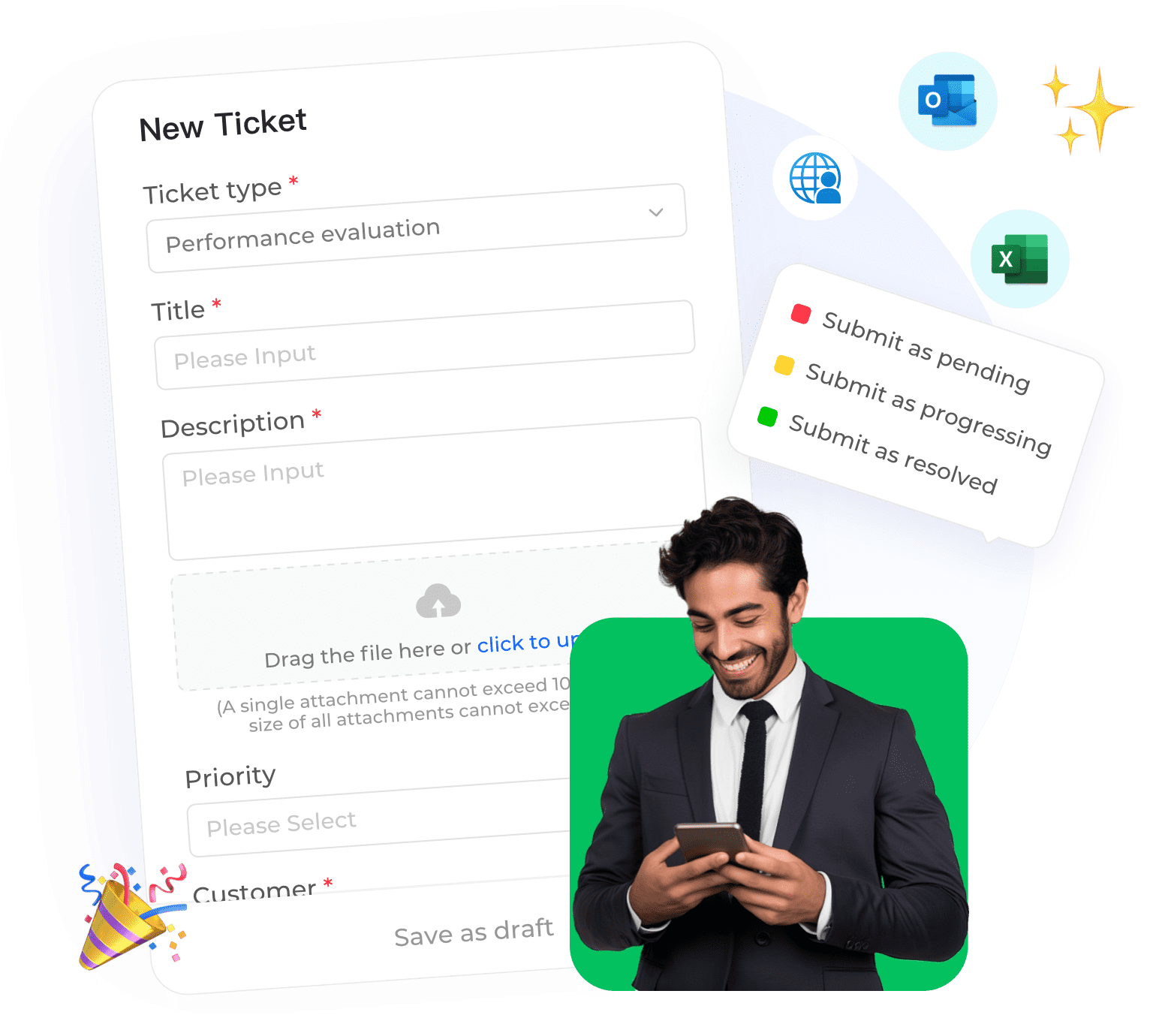
Instadesk positions its ticket system as a central layer that connects fragmented customer requests into one structured workflow. Instead of treating messages, calls, and forms as isolated interactions, all service requests are converted into trackable tickets with clear ownership and status.
This unified approach allows organizations to manage service operations continuously, even when teams rotate across time zones. Tickets created during off-hours remain visible, prioritized, and actionable once the next team comes online.
By combining omnichannel intake, centralized processing, and mobile accessibility, Instadesk enables service teams to maintain operational continuity without relying on a single location or fixed working hours.
2
. Key Functional Capabilities Enabled by Ticket System and Mobile Access
The Instadesk ticket system integrates multiple operational functions into a single workflow, ensuring that 24/7 service does not lead to chaos or duplicated effort.
Omnichannel ticket creation
Customer requests from websites, mobile apps, email, social platforms, and voice channels are automatically transformed into tickets. This eliminates the risk of missed messages and removes the need for agents to switch between systems. All interactions are stored within one timeline for each ticket.
Mobile access for distributed teams
Service agents and supervisors can access tickets through mobile-supported interfaces. This allows teams to review ticket status, respond to urgent issues, and monitor queues without being tied to a desktop environment. Mobile access supports on-call staff and managers who need visibility outside office settings.
Intelligent classification and routing
Tickets are automatically categorized and routed based on predefined rules, skills, or service scenarios. Requests can be assigned to teams operating in the same or adjacent time zones, helping organizations maintain response speed during night shifts or holidays.
SLA-oriented workflows
Each ticket follows a structured lifecycle with defined response and resolution targets. SLA status is visible throughout the process, enabling teams to identify risks early and adjust workloads in real time. This structure supports consistent service quality across regions.
Knowledge base integration
Agents can access a centralized knowledge base directly from the ticket interface. Updated answers, policies, and service instructions reduce handling time and ensure that responses remain accurate and aligned across different teams.
Reporting and operational visibility
Ticket data is consolidated into dashboards and reports that show volume trends, response times, SLA compliance, and resolution outcomes. Reports can be exported for further analysis, supporting performance reviews and operational planning.
These capabilities allow organizations to operate continuously while keeping service delivery organized and measurable.

3
. Application Results from Two Ticket System Deployments
Global Consumer Hardware Service Center
A global consumer hardware brand serving users in over 100 countries faced significant challenges as service demand grew. Customer inquiries arrived through more than 20 channels, including mobile apps, social platforms, email, and voice calls. Requests were handled manually across different tools, leading to delayed responses and inconsistent service experiences.
By adopting the Instadesk ticket system, all inbound requests were unified into a single queue. Tickets were automatically classified and routed to appropriate teams based on language and service type. Mobile access enabled supervisors to monitor ticket backlogs and SLA status even outside office hours.
As a result, service teams achieved a 99.2% SLA compliance rate, while supporting real-time communication in 15 languages. The structured ticket workflow reduced response delays and improved customer satisfaction without expanding headcount.
Public Service Hotline and Citizen Support
A public utility organization operating a critical citizen hotline required uninterrupted service availability. Call volumes fluctuated significantly during service incidents, and traditional agent-only models struggled to handle peak demand, especially at night.
Instadesk was deployed to support ticket-based service workflows alongside voice automation. Citizen requests were logged as tickets, linked with structured knowledge content and real-time system data. Mobile access allowed operations teams to track service status and ticket flow across shifts.
The system supported over 40 concurrent service requests
, ensured 24/7 availability, and reduced pressure on frontline agents. Built-in reporting and traceability improved transparency and compliance while maintaining consistent service quality for citizens.
5. A Practical Foundation for Always-On Service
A 24/7 ticket support system with mobile access is no longer just a technology feature. It is an operational requirement for organizations serving customers across regions and time zones.
Instadesk demonstrates how structured ticket workflows, omnichannel integration, and mobile accessibility can work together to support continuous service delivery. By turning every request into a visible, manageable ticket, organizations gain clarity, control, and resilience.
Whether supporting global consumers or public services, Instadesk’s ticket system provides a scalable foundation that balances availability with operational discipline, helping teams stay responsive without sacrificing consistency or accountability.