The Challenge
IDC's China AI Digital Workforce Market Report 2026 reveals that AI Agent penetration in intelligent voice robotics has exceeded 65%, with the market approaching ¥45 billion. As labor costs surge, voice AI has become the go-to solution for sales leaders across industries looking to transform their outreach strategies.
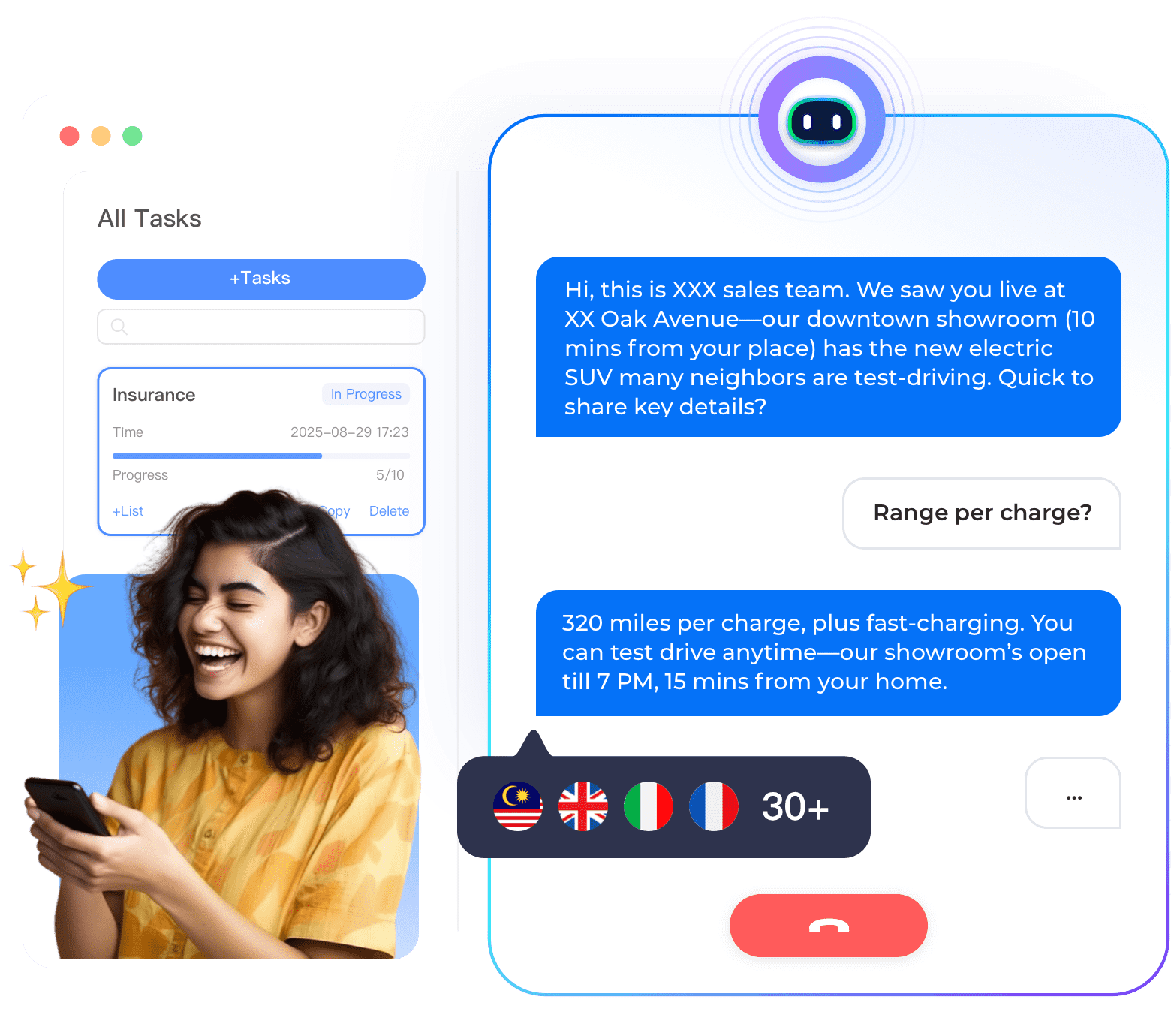
Yet traditional voice bots suffer from three critical "robotic" flaws: high latency, fragmented context, and rigid scripts. These issues lead to short conversations, high drop-off rates, and ultimately, poor conversion.
The Solution
ZKC Technology, recognized by IDC as a "Leader" in Large Model Development Platforms, has engineered a breakthrough: the "Large + Small Model" fusion architecture. This dual-model system fundamentally redefines voice AI interaction quality and conversion efficiency.
Architecture Breakdown: Synergy Over Single-Model Limitations
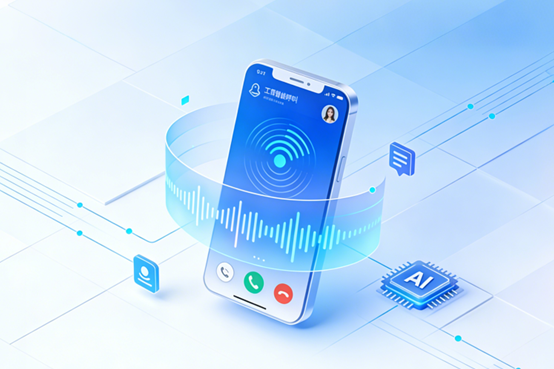
At the core of ZKC's voice AI lies a sophisticated collaborative architecture where large and small models handle distinct tasks, ensuring both conversational depth and real-time responsiveness.
Large Language Models (LLM):
Trained on tens of millions of voice interaction datasets, the LLM tackles complex tasks—deep semantic understanding, intent recognition, predictive needs analysis, dynamic script generation, and objection handling. This eliminates rigid scripts and enables true sales-adaptive agility.
Small Language Models (SLM):
Optimized for high-frequency standardized scenarios, the SLM manages instant responses, basic command execution, and workflow transitions. Its lightweight design ensures seamless interaction flow without computational lag.
Through ZKC's fully self-developed tech stack, tasks are intelligently distributed: the SLM handles simple inquiries instantly, while seamlessly escalating complex objections or deep needs to the LLM. This hybrid approach eliminates the "capability gaps" and "response delays" inherent in single-model systems.
Four Technical Pillars: Making Voice AI Indistinguishably Human
1. Sub-Second Latency: The 800ms Breakthrough
Latency is the primary culprit behind "machine-like" interactions. ZKC optimizes the entire ASR→LLM→TTS pipeline to deliver responses within 800ms. By leveraging SLM-powered preprocessing (noise reduction, basic semantic extraction), computational load on the LLM is minimized. Meanwhile, parallel processing allows intent analysis and script generation to occur simultaneously. Compared to the industry average of 1.5 seconds, ZKC's sub-second latency creates the perception of human conversation, significantly reducing hang-up rates.
2. Contextual Memory: Eliminating "Digital Amnesia"
Traditional bots fail because they forget. ZKC's LLM retains full conversation history in real-time, integrating with enterprise CRM data to correlate historical customer information with live dialogue. When a customer discusses pricing and later mentions budget constraints, the AI seamlessly connects the dots—recommending tailored solutions without asking redundant questions. This contextual continuity transforms interactions from transactional to consultative.
3. Dynamic Scripting: Cloning Top Sales Performers
Rigid scripts scream "automation." ZKC's system fuses enterprise-specific sales methodologies with industry logic, generating personalized responses based on customer intent and emotional state. The SLM ensures real-time delivery, while ZKC's proprietary TTS technology—featuring voice cloning and emotional parameter adjustment—produces speech patterns indistinguishable from human agents. From gentle consultation to professional objection handling, the combination of adaptive scripting and emotive voice synthesis maximizes persuasion and trust.
4. Human-in-the-Loop: Seamless Handoff Without Friction
When scenarios exceed AI capabilities, ZKC's emotion recognition triggers intelligent escalation. By analyzing tone, speech patterns, and keywords, the system detects frustration, anxiety, or explicit requests for human agents—initiating seamless transfers. Crucially, voice consistency technology ensures the transition sounds like the same speaker, preventing jarring disconnects. Full context accompanies the handoff, enabling human agents to convert warm leads efficiently.
Proven Results: Financial Services Case Study
The architecture's real-world impact is validated by a leading financial institution deployng ZKC's solution:
Conversation depth:
+83% increase in dialogue turnsEngagement:
+50% longer average call durationRevenue:
+68% performance improvement through precise needs capture
These metrics demonstrate the dual advantage of ZKC's fully proprietary stack: enterprise-grade data security, rapid model iteration, and the ability to balance "deep customer understanding" with "instant responsiveness."
The Bottom Line
For sales leaders across industries, ZKC's voice AI doesn't just reduce operational costs—it transforms outreach from one-way pitching to genuine two-way dialogue. The result: reduced costs, increased efficiency, and higher conversion rates.
As the market evolves from keyword matching to deep intent understanding, eliminating the "robotic" feel is no longer optional—it's the competitive differentiator. ZKC's Large + Small Model architecture delivers exactly that: intelligent voice experiences that sound human, understand deeply, and convert reliably.