Digital Skill Training: How a Malaysian Car Dealership Increased Sales by 20% with AI Simulation
Malaysian car dealerships face intense competition, price-sensitive customers, and high turnover among sales staff. Traditional training methods—classroom lectures, e-learning modules, and occasional role-play with colleagues—fail to build the practical negotiation and objection-handling skills needed to close deals. New salespeople take months to reach quota, and many leave within the first year. This case study examines how a Malaysian car dealership group deployed Instadesk’s AI-powered digital skill training to upskill its sales force, resulting in a 20% increase in sales conversion and a 30% reduction in onboarding time.

Customer Background and Pain Points
The dealership group, with 10 locations across the Klang Valley and Penang, employed 150 salespeople. The group sold both new and used cars from multiple brands (Toyota, Honda, Proton, Perodua). Sales performance varied widely between locations, and new hires took an average of 4 months to reach monthly sales targets. Turnover among salespeople was high (40% annually), driven by frustration with rejections and lack of effective coaching.
Managers identified three key skill gaps:
Handling price objections: Customers often said “This car is too expensive” or “I can get a better price elsewhere.”
Trade-in negotiations: Customers overvalued their old cars, and salespeople struggled to justify the offered trade-in value.
Closing techniques: Many salespeople failed to ask for the sale or left without setting a follow-up appointment.
Traditional training (one-day workshops, online videos) did not provide enough practice. Role-play with colleagues was unrealistic because colleagues did not act like real customers.
The Solution: AI-Powered Digital Skill Training
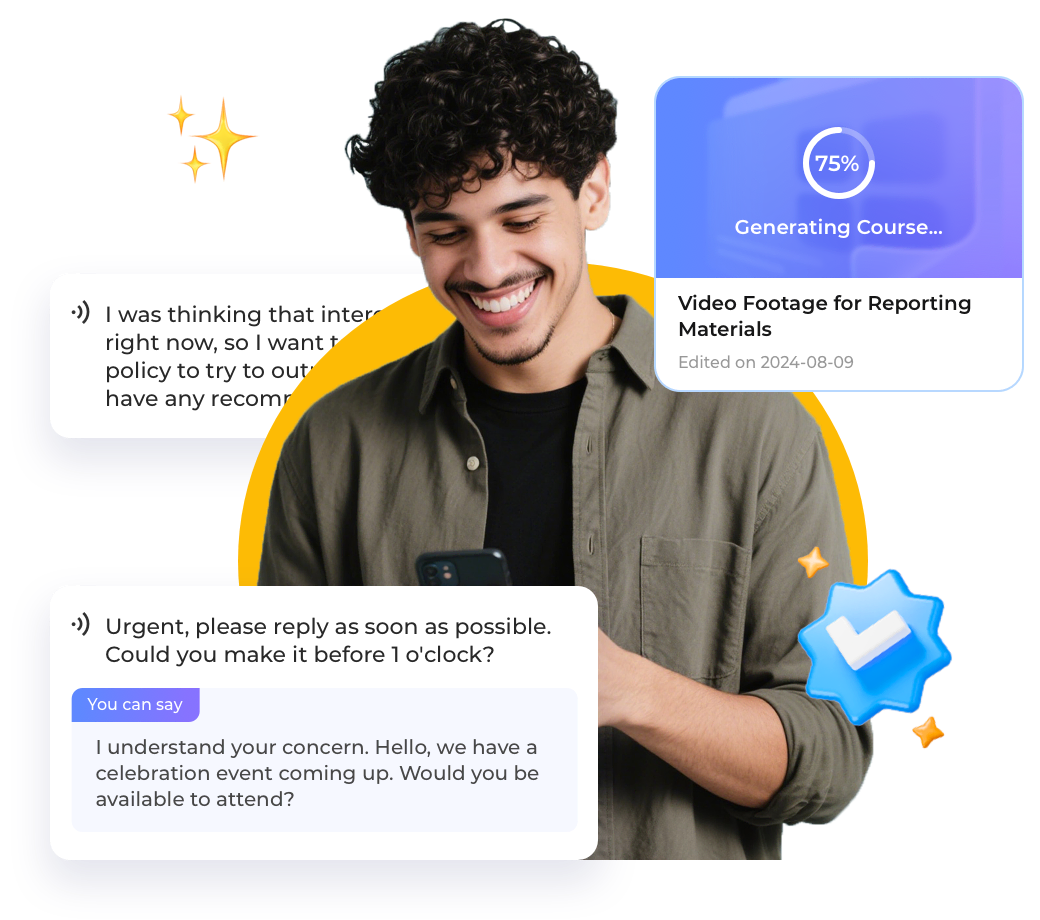
The group deployed Instadesk’s Intelligent Training platform, which provides realistic role-play simulations with AI-generated virtual customers. The AI personas were designed to mimic Malaysian car buyers: price-sensitive, family-oriented, and often negotiating in a mix of English and Bahasa Malaysia. The platform included three core modules:
Price objection handling: The AI customer repeatedly objected to the price, forcing the salesperson to justify value, offer financing options, or propose alternatives.
Trade-in negotiation: The AI customer provided a trade-in vehicle description and expected value. The salesperson had to assess the vehicle, explain the valuation, and negotiate.
Closing techniques: The AI customer expressed hesitation; the salesperson had to recognize buying signals and ask for the sale.
After each simulation, the AI provided real-time feedback on tone, objection handling, compliance (e.g., disclosing financing terms), and closing effectiveness. Salespeople could practice as many times as they wanted, and managers could track individual progress via a dashboard.
Implementation and Results
The training was deployed in 2 weeks. Salespeople were asked to complete 15 minutes of daily practice (one simulation) during morning huddles. After 6 months:
Onboarding time for new salespeople reduced from 4 months to 2.5 months (30% reduction).
Sales conversion rate (test drive to sale) increased from 22% to 26.5% (20% improvement).
Average gross profit per vehicle increased by RM 1,500 (approx. $350) due to better trade-in and financing negotiations.
Turnover among salespeople decreased by 25% in the first year.
Training costs reduced by 40% (eliminated travel for in-person workshops).
The dealership group also reported that the AI training helped standardize sales techniques across all locations. Top-performing scripts identified by the AI were shared across the group, leading to a more consistent customer experience.
Key Lessons for Malaysian Dealerships
Daily short practice (15 minutes) is more effective than occasional full-day training. The AI simulation made it easy to fit into daily routines.
AI-generated personas should reflect local customer behaviors. The Bahasa Malaysia and English mix, as well as price sensitivity, were crucial for realism.
Real-time feedback accelerates skill development. Salespeople could see immediate improvements.
Training should be integrated with sales CRM to correlate practice with actual performance. The dealership group found that salespeople who completed the most simulations had the highest conversion rates.
How Instadesk’s Digital Skill Training Works
Instadesk’s platform includes automotive-specific scenarios pre-configured for the Malaysian market. The AI personas can be customized for different car brands, customer demographics, and negotiation styles. The platform supports both Bahasa Malaysia and English. Managers have access to a dashboard showing individual competency scores, time spent practicing, and areas for improvement. The platform also allows managers to upload their own scripts and objection lists.
Digital skill training with AI simulation transformed this Malaysian car dealership’s sales performance. Faster onboarding, higher conversion, lower turnover, and reduced training costs delivered a strong ROI. Other Malaysian automotive dealerships can achieve similar results by adopting AI-powered training. Instadesk offers a free trial for dealerships to test the platform with a small group of salespeople.
Share This Article


Olivia
Content Marketing & Omnichannel Operation Specialist
You may also like

Instadesk vs Zendesk Agent Copilot: Which Intelligent Training Solution Fits Your Banking Call Center?
Compare Instadesk and Zendesk Agent Copilot for banking call centers. Discover why Instadesk’s AI role-play training is essential for pre-boarding compliance, while Zendesk boosts real-time agent productivity.


Instadesk vs Zendesk: AI Training Comparison for Vietnam
Discover the best AI solution for your Vietnamese enterprise: Instadesk for advanced pre-service training vs. Zendesk Copilot for real-time agent assistance. Read our full comparison.


Corporate Training: Frequently Asked Questions (FAQ) for Enterprises
This FAQ addresses key corporate training questions, comparing traditional e‑learning and AI‑powered simulation. It covers suitable training types, implementation time, ROI, effectiveness measurement, and platform selection. It also introduces Instadesk’s Intelligent Training platform and its benefits for employee upskilling and business performance.
Get Started in Minutes. Experience the Difference.




WhatsApp Us Now !