What is an onboarding program?
An onboarding program is a structured process designed to integrate new employees into an organization, equipping them with the knowledge, skills, and resources needed to succeed in their roles. Effective onboarding goes beyond orientation—it is a comprehensive approach that spans the first weeks and months of employment, covering company culture, policies, job-specific training, and relationship building.
In healthcare, where patient safety and regulatory compliance are paramount, onboarding programs are critical for ensuring new staff—from clinicians to administrative personnel—are prepared to perform their duties effectively and safely.

Onboarding vs. Training: What's the difference?
Aspect |
Onboarding |
Training |
|
Scope
|
Broad: culture, role, systems
|
Narrow: specific skills, tasks
|
|
Duration
|
Weeks to months
|
Hours to days
|
|
Focus
|
Integration into organization
|
Competency development
|
|
Outcomes
|
Engagement, retention, readiness
|
Proficiency, certification
|
|
Timing
|
Begins before day one
|
Ongoing throughout employment
|
Onboarding includes training as a core component, but also encompasses cultural immersion, relationship building, and role clarification.Why onboarding programs matter in healthcare
Healthcare organizations face unique onboarding challenges:
• Patient safety:
New staff must be fully competent before interacting with patients.
• Regulatory compliance:
Healthcare is heavily regulated; new employees must understand HIPAA, infection control, and clinical protocols.
• Complex systems:
Electronic health records (EHRs), scheduling systems, and billing platforms require extensive training.
• High stakes:
Mistakes can have serious consequences for patient health.
• Staff shortages:
Rapid onboarding is essential to address healthcare workforce gaps.
Effective onboarding programs deliver:
• Faster time-to-competency:
New staff become productive sooner.
• Improved patient safety:
Well-trained staff make fewer errors.
• Higher retention:
Structured onboarding improves job satisfaction and reduces turnover.
• Regulatory compliance:
Ensures all staff meet mandatory training requirements.
How to design an effective onboarding program in healthcare
• Start before day one: Send pre-arrival information about culture, expectations, and logistics.
• Create a structured schedule: Map out the first weeks with clear goals and milestones.
• Combine formal training with hands-on practice: Classroom learning paired with supervised experience works best.
• Assign mentors or buddies: Experienced staff can guide newcomers through the nuances of the role.
• Use technology: Digital platforms can deliver consistent training and track progress.
• Gather feedback: Continuously improve the program based on new hire input.
How Instadesk Intelligent Training transforms healthcare onboarding
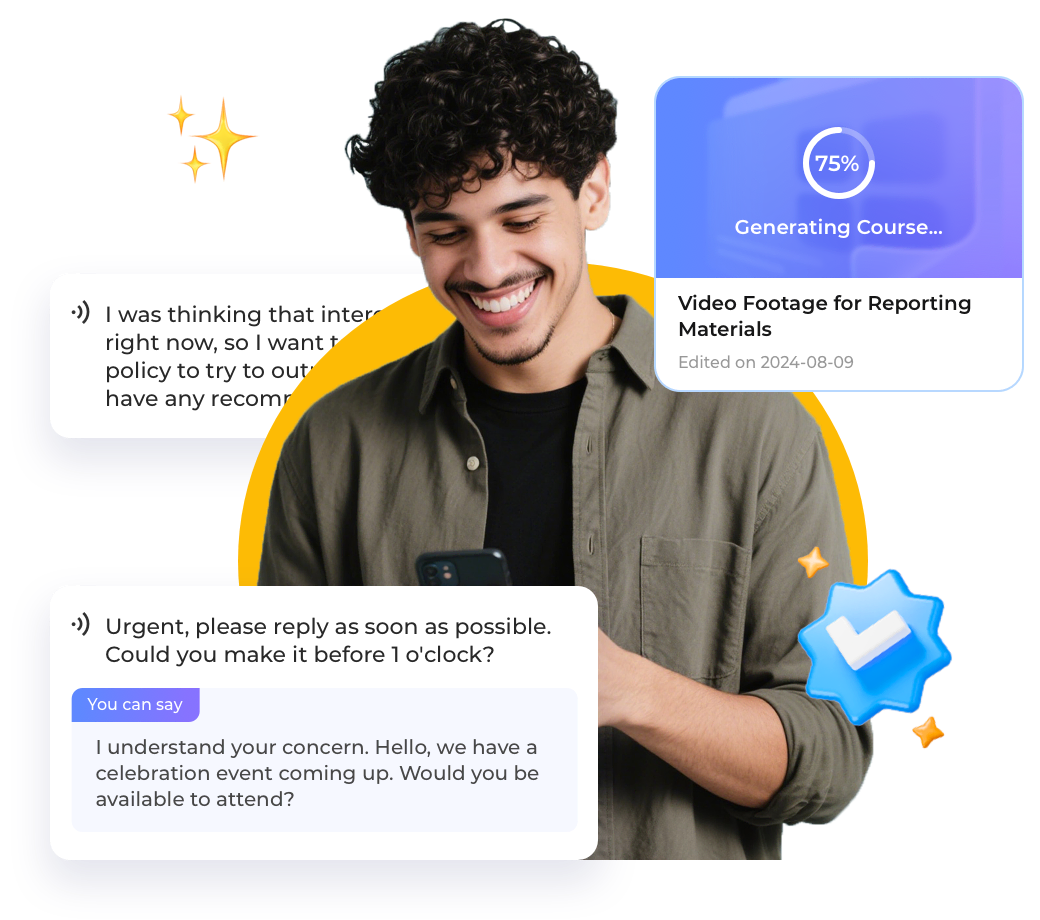
Instadesk's Intelligent Training platform revolutionizes healthcare onboarding with AI-powered simulations and personalized learning:
• Realistic clinical scenarios:
New staff practice with virtual patients in safe, realistic simulations—handling patient intake, explaining procedures, responding to emergencies.
• Personalized learning paths:
AI identifies each learner's knowledge gaps and recommends specific training modules.
• Real-time feedback:
After each simulation, learners receive detailed coaching on communication, clinical accuracy, and empathy.
• Compliance tracking:
Automatically track completion of mandatory training for regulatory reporting.
• Progress dashboards:
Managers see each new hire's progress toward competency.
Frequently asked questions
Q: How long should a healthcare onboarding program last?
A: It varies by role. Clinical staff may need months of onboarding; administrative staff may need weeks. The key is ensuring competency before independent work.
Q: Can simulation-based training replace hands-on experience?
A: No, but it accelerates learning by allowing safe practice before real patient interactions.
Q: How do we measure onboarding success?
A: Track time-to-productivity, retention rates, satisfaction surveys, and competency assessments.
An effective onboarding program is essential for healthcare organizations to ensure patient safety, regulatory compliance, and staff retention. Instadesk's AI-powered Intelligent Training helps healthcare providers onboard new staff faster, more consistently, and with measurable results.