What is skill development?
Skill development is the intentional process of identifying capability gaps and building the knowledge, abilities, and competencies needed to perform effectively in a role. For customer service agents in automotive manufacturing—whether they support dealers, fleet customers, or end consumers—skill development encompasses product knowledge, communication, problem-solving, and technical proficiency.Skill development vs. Training: What's the difference?
Aspect |
Training |
Skill Development |
| Focus | Specific tasks or systems | Broader capabilities and competencies |
| Duration | Short-term, event-based | Ongoing, continuous process |
| Approach | One-size-fits-all | Personalized to individual needs |
| Outcome | Immediate task proficiency | Long-term career growth and adaptability |
Both are important, but skill development emphasizes building a foundation for continuous improvement.

Why skill development matters in automotive manufacturing customer service
Automotive customer service is complex. Agents must understand:
Vehicle specifications: Trims, options, packages across multiple models.
Technical issues: Diagnosing problems, explaining repairs.
Warranty and service contracts: Complex terms and coverage details.
Dealer relationships: Supporting B2B partners with parts and service questions.
Customer expectations: Buyers invest significant money and emotion in vehicles.
Well-developed skills lead to:
Higher first-contact resolution: Agents solve issues without escalation.
Improved customer satisfaction: Knowledgeable, confident agents build trust.
Reduced agent turnover: Skilled agents feel competent and valued.
Better brand reputation: Every interaction reflects on the manufacturer.How to approach skill development effectively
Assess current capabilities: Identify gaps between required and actual skills.
Create personalized development plans: Different agents need different focus areas.
Provide varied learning methods: Combine formal training, on-the-job practice, mentoring, and self-directed learning.
Practice in safe environments: Simulations allow agents to practice difficult scenarios without real-world consequences.
Measure progress: Track improvements in performance metrics and customer satisfaction.How Instadesk Intelligent Training accelerates skill development
Instadesk's Intelligent Training platform uses AI to transform how automotive manufacturers develop agent skills:
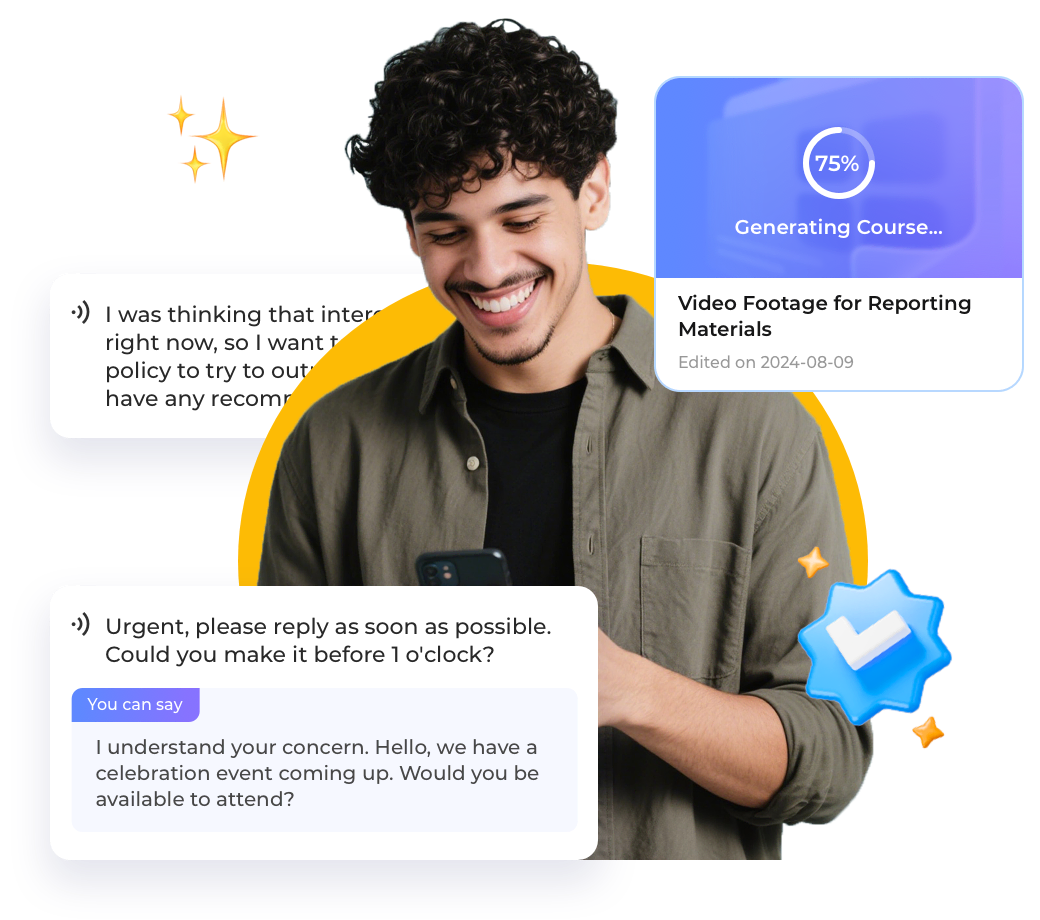
AI-powered simulations: Agents practice with virtual customers in realistic scenarios—handling a warranty dispute, explaining a complex repair, calming an angry dealer.
Personalized learning paths: AI identifies each agent's skill gaps and recommends specific scenarios.
Real-time feedback: After each simulation, agents receive detailed coaching on tone, accuracy, compliance, and empathy.
Progress tracking: Managers see skill development across their team, identifying who needs additional support.
Safe practice environment: Agents build confidence without risking customer relationships.Frequently asked questions
Q: What customer service skills matter most in automotive?
A: Key skills include product knowledge, empathy, clear communication, problem-solving, technical proficiency, and adaptability.
Q: How long does skill development take?
A: It's ongoing, but focused simulation-based training can accelerate proficiency from months to weeks.
Q: Can AI really teach soft skills like empathy?
A: AI can't replace human coaching, but simulations with feedback help agents practice and internalize empathetic responses.
Skill development is essential for automotive manufacturers seeking to deliver exceptional customer service. By combining traditional methods with AI-powered simulations, Instadesk Intelligent Training helps agents build the competencies they need—faster, more consistently, and with measurable results.