Voice Bot with Global Call Routes:Ultimate Guide for Malaysian Enterprises
Malaysian businesses are increasingly serving customers across Southeast Asia and beyond.However,international customer support presents significant challenges:customers are reluctant to call an international number,language barriers cause frustration,and time-zone differences lead to delayed responses.A voice bot with global call routes solves these problems by providing local phone numbers in multiple countries,automatically detecting the caller’s language,and routing calls to the appropriate agent or bot based on the caller’s location.This comprehensive guide explains what global call routes are,key features,benefits for Malaysian enterprises,implementation steps,pricing,and selection criteria,with a focus on how Instadesk’s platform enables seamless global expansion.
What Are Global Call Routes?
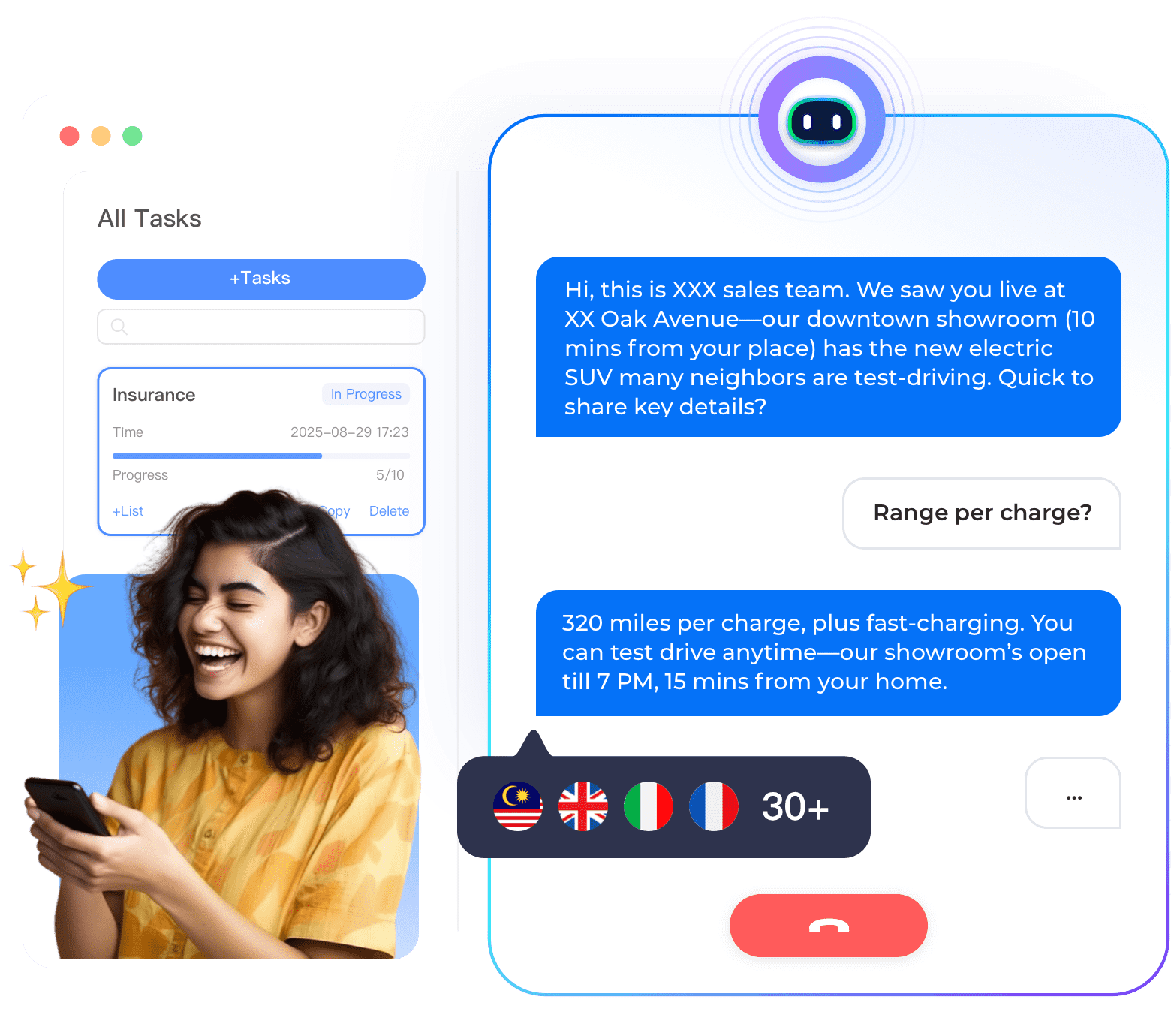
Global call routes allow a voice bot system to intelligently direct incoming calls based on the caller’s geographic location.The system detects the caller’s country(via caller ID or IVR input),then selects the appropriate language voicebot,local phone number,and agent queue.For example,a customer calling from Indonesia hears a Bahasa Indonesia voicebot and is routed to an agent who speaks Bahasa Indonesia.A customer from Singapore hears English and is routed to the Singapore team.This creates a localized experience for each market without the need for separate call center instances.

Key Features of Global Call Routes
•Local phone numbers:Acquire numbers in 50+countries,including all ASEAN nations(Malaysia+60,Indonesia+62,Singapore+65,Thailand+66,Philippines+63,Vietnam+84,etc.).Customers call a local number,avoiding international charges.
•Automatic language detection:The system identifies the caller’s language from their first few words and switches the voicebot to that language.Supported languages include Bahasa Malaysia,English,Mandarin,Tamil,Bahasa Indonesia,Thai,Vietnamese,and more.
•Time-zone routing:Calls are routed to agents or bots based on the caller’s local business hours.For example,a call from Japan(UTC+9)during Japanese business hours goes to a live agent;outside those hours,it goes to a voicebot or voicemail.
•Centralized management:All routes,numbers,and scripts are configured from a single dashboard.You can add a new country in minutes.
•Unified analytics:Track call volume,answer rates,customer satisfaction,and cost by country,language,and time of day.
•Compliance with local data laws:Data residency options ensure that call recordings are stored in the appropriate region(e.g.,EU for GDPR,Malaysia for PDPA).
Benefits for Malaysian Enterprises
•Improved customer experience:Customers feel valued when they call a local number and speak in their native language.This builds trust and reduces friction.
•Higher answer rates:Local numbers have much higher pick-up rates than international numbers.Studies show answer rates increase by 30-50%when using a local caller ID.
•Cost savings:Customers avoid international call charges,and you avoid expensive international toll-free numbers.
•Scalability:Add new countries with a few clicks.No need to set up separate call centers or hire local staff in each country.
•Faster time-to-market:With pre-configured templates for each country,you can launch voice support in a new market within days.
•Better compliance:Data residency options help you meet local privacy laws like Malaysia’s PDPA,Indonesia’s Hukumonline,and Thailand’s PDPA.

How to Implement Global Call Routes with Instadesk
Step 1:Identify your target countries.List the countries where you have the most customers or where you plan to expand.
Step 2:Acquire local phone numbers.Instadesk provides numbers in over 50 countries through its global carrier network.Numbers are provisioned instantly.
Step 3:Configure language detection and routing rules.Set up which language voicebot should be used for each country.You can also route calls to specific agent groups based on language or region.
Step 4:Build or translate voicebot scripts.Instadesk offers pre-built templates for common use cases(order status,appointment booking,FAQ)in multiple languages.You can also upload your own translations.
Step 5:Set up time-zone routing.Define business hours for each country and what happens after hours(voicebot,voicemail,or queue).
Step 6:Test with calls from each country.Use a test number or ask local partners to call and verify the experience.
Step 7:Launch and monitor.Go live and use the analytics dashboard to track performance by country.Continuously optimize scripts based on customer feedback.
Pricing and Cost Considerations
Instadesk offers pay-as-you-go per-minute pricing for global call routes.There are no setup fees,no per-seat minimums,and no long-term contracts.Local number acquisition is included in the service.Per-minute rates vary by country;typical rates range from$0.02 to$0.10 per minute.For example,calls from Malaysia cost$0.03 per minute,from Indonesia$0.05,from Singapore$0.02.Volume discounts are available for high-volume customers.Compared to traditional international toll-free numbers(which can cost$0.20-$0.50 per minute),Instadesk’s global routes are significantly cheaper.
Selection Criteria for Global Route Voice Bots
When evaluating vendors for global call routes,consider the following:
•Does the vendor offer local numbers in your target countries?Some vendors only support a handful of countries.
•Does it support automatic language detection and routing?Not all platforms can detect language from speech.
•Are there pre-built integrations with your CRM and other systems?This ensures a seamless customer experience.
•Is data residency available for compliance?If you operate in regulated industries,you may need to store data locally.
•What is the pricing model?Avoid per-seat minimums and hidden fees.Pay-as-you-go per minute is most flexible.
•How long does deployment take?Instadesk can activate global routes in days;some vendors take months.
Why Instadesk Is the Best Choice for Malaysian Enterprises
Instadesk stands out as the most cost-effective and user-friendly solution for global call routes.Key advantages include:
•Local numbers in all ASEAN countries and major global markets,instantly provisioned.
•Pre-trained NLU for Bahasa Malaysia,English,Mandarin,Tamil,Bahasa Indonesia,Thai,and Vietnamese.
•Transparent pay-as-you-go per-minute pricing with no setup fees or long-term contracts.
•Deployment in 2-4 weeks,including integration with your existing systems.
•Data residency options in Malaysia(AWS Asia Pacific–Kuala Lumpur region)for PDPA compliance.
•24/7 customer support in multiple languages.
Case Study:Malaysian Logistics Company Expands to 5 Countries with Global Routes
A Malaysian logistics company serving e-commerce businesses expanded into Indonesia,Thailand,Singapore,and the Philippines.They deployed Instadesk’s global call routes with local numbers in each country.Customers could call a local number to track shipments or report delivery issues.The voicebot automatically detected the caller’s language and provided tracking updates in Bahasa Indonesia,Thai,English,or Tagalog.Results after 9 months:answer rates increased by 45%compared to using an international number;customer satisfaction scores improved by 30%;the company saved$40,000 annually on international toll-free costs.

Conclusion
For Malaysian enterprises looking to serve international customers,a voice bot with global call routes is essential.Instadesk delivers local numbers,multilingual AI,intelligent routing,and transparent pricing,enabling you to provide a localized customer experience at a fraction of the cost of traditional solutions.Start with a free trial to test global routes for your business.
Share This Article


Rina
Integrated Cross-Platform Digital Strategist
You may also like

Voice Bot with Intelligent Interruption:Pricing and ROI Guide for Singapore Call Centers
Intelligent interruption allows a voice bot to politely break into a customer’s speech when they pause or when the bot has critical information.This feature makes conversations more natural and reduces call duration.For Singapore call centers,where labor costs are high,a voice bot with intelligent interruption can significantly improve efficiency.This article explains pricing models for such voice bots,total cost of ownership,and ROI calculations,with a focus on Instadesk’s payasyougo offering.


Voice Bot Conversion Rate Comparison:Instadesk vs Google Dialogflow vs Amazon Lex
Conversion rate is the most critical metric for outbound sales voice bots.A higher conversion rate means more sales from the same number of calls,directly impacting revenue.This article compares the conversion rate performance of three leading voice bot platforms—Instadesk,Google Dialogflow CX,and Amazon Lex—based on realworld campaign data.It evaluates features that drive conversion:dynamic scripting,sentiment analysis,objection handling,and A/B testing.Instadesk leads with an average conversion rate of 12%for qualified leads,compared to 8%for Dialogflow and 7%for Lex.


Voice Bot with CRM Integration:Automating Customer Service for Philippine Insurers
Philippine insurance companies receive thousands of calls daily from policyholders asking about coverage details,claim status,premium due dates,and beneficiary information.Each of these inquiries requires the agent to access the company’s CRM system,look up the customer’s records,and provide an answer.Without automation,this process takes three to five minutes per call,leading to long wait times during peak hours.A voice bot integrated with your CRM can access customer data in real time,providing personalized answers instantly and reducing agent workload.This article explains how CRMintegrated voice bots work,their benefits for Philippine insurers,and how Instadesk’s platform delivers seamless integration with local CRM systems while complying with the National Privacy Commission(NPC)requirements.

Get Started in Minutes. Experience the Difference.




WhatsApp Us Now !